
How to Use a Lemon Vibrator When Exploring With a Partner for the First Time
Honestly though, here's the thing about bringing toys into a relationship: the conversation is scarier than the actual experience. You're not introducing a vibrator. You're saying something deeper, which is "I want more from us" or "I'm curious" or sometimes just "I deserve pleasure." Your partner might hear all of that, or they might just hear "vibrator," and that's where it gets sticky.
The good news? A lemon vibrator is one of the least threatening entry points into partnered toy play. It's designed for external clitoral stimulation, which means there's nothing replacing your partner, nothing that requires negotiation around penetration dynamics. It's purely additive. Think of it as an enhancement, not a workaround.
Let's talk about how to actually do this without making it weird.
The Conversation Matters More Than You Think
Don't just show up with a toy. That's not initiation, that's surprise, and surprise rarely translates well here.
You need a neutral moment. Not mid-sex, not in the bedroom, not when either of you is rushed or defensive. Tuesday evening on the couch is fine. Afternoon coffee is fine. Sometime when you can actually talk without performance pressure.
Here's what that conversation actually looks like: "I've been thinking about trying something new. I found this lemon vibrator, and I'm curious what it feels like with you. Would you be open to exploring that together?" That's it. You're not apologizing for wanting more sensation. You're not framing it as a problem with them. You're naming a thing you want and inviting them into it.
Their response tells you everything. If they're excited, you've got a partner who wants to play. If they're hesitant, that's useful information too. Hesitation usually isn't about the toy. It's about what the toy represents to them. Maybe they feel replaced. Maybe they think wanting a vibrator means they're not enough. That's a separate conversation, and it's one worth having before you ever touch the thing.
Setting the Scene (No, Really)
The first time using a lemon vibrator together doesn't happen during routine sex. You're not trying to fold it seamlessly into your regular rhythm. You're doing a thing together, which means you're both present for it.
Clear some space. Put the phone away. Set a time when you're not rushed. This isn't about performance or results. It's about exploration.
Have your lube ready. Water-based, always. Your partner probably knows this, but say it anyway. "I got water-based because it plays well with silicone." Small acts of preparation signal that you've thought this through, that you care about both of your experiences.
Also: start with the toy off. Seriously. Let your partner hold it, look at it, feel the weight and texture. Familiarity kills anxiety faster than anything else. The lemon vibrator is smooth, it's ergonomic, it's not intimidating once you've actually felt it.
When to Introduce the Vibration
Wait until you're already aroused. Don't use the vibrator to start the process. Build arousal the way you normally do—hands, mouth, kissing, whatever your rhythm is. Once you're actually into it, once there's clear physical response happening, that's when you bring the toy in.
Start with lower intensities. Most lemon vibrators have a few pattern options. Don't assume intensity settings go 1-10. Often it's more like 1-5 with different wave patterns mixed in. Start at the gentlest option.
If you're receiving, you'll notice the difference immediately. The sensation is concentrated, rhythmic, and completely different from your partner's hands or mouth. It's not better or worse. It's novel. Your brain might need a second to catch up with what pleasure feels like when it's coming from a different source.
What Your Partner Should Know
Let me be direct: if your partner is using the toy on you, they're not at rest. They're participating. This is actually one of the best angles on partner vibrator play, because it's collaborative. They still have agency. They're choosing when and where and how to use it.
Tell them what feels good as it's happening. "Slower." "Right there." "Lighter." This might be the first time they're getting real-time feedback on what actually works for you, and it matters.
Also tell them what doesn't. If a particular pattern feels weird or uncomfortable, say so immediately. You're not failing. You're just learning what your body responds to.
The Orgasm Question
Here's what most people worry about: will I orgasm differently? Will it be better? Will they feel weird about it?
Maybe. Clitoral vibration, especially from a lemon vibrator designed specifically for external stimulation, can produce more intense or more rapid orgasms than manual stimulation. Some people orgasm faster. Some people orgasm deeper. Some people find that the type of orgasm feels qualitatively different.
That's normal. That's also not a problem for you to manage. If your partner is watching you orgasm with a toy and feeling insecure about it, that's their thing to sort out, not yours to apologize for. Your pleasure is not a referendum on their capability.
After the First Time
Talk about it afterward. Not a clinical debrief, just genuine reaction. Did you like it? Do you want to do it again? What felt surprising?
You might find that your partner wants to use it solo on you sometimes. You might discover that you like using it on them (yes, this works for all bodies). You might use it together as a couple thing occasionally, or you might shelf it for a few months and revisit it later.
The goal isn't regular vibrator integration. The goal is knowing that you can explore together without it becoming a thing. Once you've done it once, it's just another option in your toolkit.
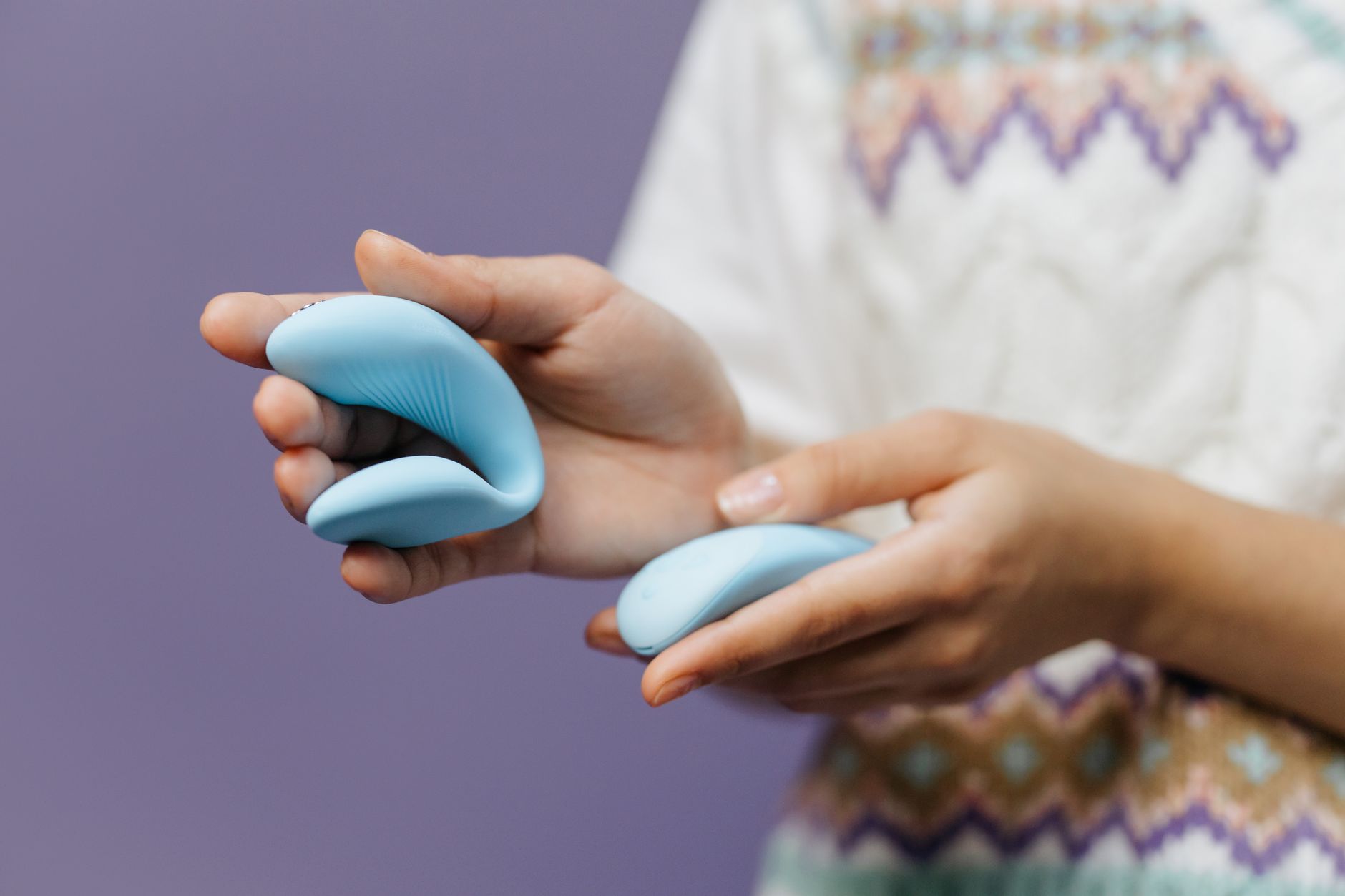
Photo by cottonbro studio on Pexels
Common Worries (And Why They're Usually Not Real)
A lot of people worry that introducing a toy means their relationship is broken. It doesn't. It means you're curious. Curiosity is actually the healthiest sign.
You might worry that your partner will feel replaced. They won't, as long as you frame this as an addition, not a substitution. The lemon vibrator isn't standing in for them. It's something you're doing together.
You might worry that toys mean you're not attracted to your partner anymore. False. Wanting more sensation doesn't correlate with wanting less of your partner. These are separate systems. You can want both.
You might worry that this escalates into something you're not comfortable with. It doesn't have to. You can explore a lemon vibrator and never move beyond it. Boundaries are real, and "I want to try toys but only this one" is a perfectly valid boundary.
If It Goes Sideways
Sometimes one partner gets genuinely uncomfortable. Not awkward. Uncomfortable. If that happens, pause. Put the toy away. Ask what's coming up for them.
Often it's not about the toy at all. It's about vulnerability. It's about control. It's about body image or sexual shame. These are things worth exploring, ideally with a therapist who specializes in couples work. But they're not reasons to write off partnered play forever.
Why Couples Actually Use Lemon Vibrators Together
It creates novelty in long-term relationships. After years together, your bodies become predictable to each other. A vibrator breaks that pattern. Suddenly you're both paying attention again.
It levels pleasure. A lot of partnered sex prioritizes stimulation that benefits one person over the other. A lemon vibrator makes it possible to have mutual pleasure, mutual intensity, mutual focus.
It removes performance pressure. When the vibrator is doing direct clitoral work, your partner isn't worried about whether their fingers are tired or whether they're "doing it right." Everyone can relax and actually feel.
It opens conversation about pleasure. Using a vibrator together is often the gateway to talking about what you actually want sexually, which is conversation most couples never have.
Next Steps
If you and your partner are curious but nervous, start here. The lemon vibrator is designed for this. It's intuitive. It's not intimidating. It's a genuinely good entry point into toy play.
If you want more structure, we have a full guide to using lemon vibrators that walks through solo use, which helps you understand your own responses before bringing a partner into the mix.
If you're rebuilding intimacy after a long gap, how to rebuild intimacy after extended time without sex has more on that specific dynamic.
People Also Ask
What if my partner thinks vibrators are weird or emasculating?
That's an identity thing, not a toy thing. A lot of partners internalize the idea that toys diminish them or that real sex doesn't involve tools. Neither is true. The best sex is often the most collaborative, and tools are just part of collaboration. If your partner is genuinely resistant, the conversation is less about the vibrator and more about what it represents to them. What does pleasure look like in your relationship? Who gets to define what counts as "real" sex? These are bigger questions, and they're worth having.
Can you use a lemon vibrator during penetrative sex?
Depends on the positioning. External clitoral vibrators work best during sex when they're accessible from the top or side. If you're doing missionary or spooning, sure. If you're in a position where reaching the clitoris is difficult, maybe not. The best discovery here is experimenting with positions that actually work for both of you, which is something most couples never actually discuss.
How do you even bring up the cost without it being awkward?
Don't hide it. "I found this thing I want to try. It's $89." That's it. Your partner probably spends money on things you don't entirely understand. This is the same. If cost is genuinely a barrier for your household, that's a money conversation, not a toy conversation.
What if you want to explore and your partner doesn't?
You get to explore anyway. You're not required to wait for partner permission to know your own body. Using a lemon vibrator solo is completely valid. It's also often the thing that helps you learn what you like, which then makes partnered play better when your partner is ready.
Do you need special cleaner for a lemon vibrator?
No. Warm water and mild soap. Some people use toy cleaner if they have it, but it's not necessary. Dry it completely before storing. That's genuinely it.
What if it becomes the only way you can orgasm?
It won't. This is anxiety talking. The vibrator is a tool that teaches your body what sensation is possible. You're not becoming dependent on it any more than you become dependent on your partner's hands. You have neural plasticity. You can access multiple types of pleasure. A lemon vibrator is an addition to your repertoire, not a replacement for everything else.
Introducing a lemon vibrator to your partnership is genuinely one of the best relationship investments you can make. It signals that you value pleasure, that you're willing to be vulnerable, and that you see your partner as someone worth exploring with. Start with conversation. Move slow. Pay attention to what actually feels good. Everything else follows naturally from there.
If you're curious about what to expect with your first device, how to find the right lemon vibrator if you've never used one before walks through the options. Or if you're rebuilding connection after relationship stress, how to rebuild pleasure after long-term relationship stress might resonate.
Your pleasure matters. Partnership is about exploration. These two things can absolutely coexist.