When preference shifts, everything feels different
Let's be real. You've been intimate with your partner for years. You know what works, what rhythm builds you up, what gets you there. Then something shifts. Maybe they've lost interest in oral sex. Maybe they want to focus on penetration. Maybe the frequency has changed. Whatever it is, the familiar landscape of your pleasure just tilted.
Your clitoral sensitivity hasn't broken. But it sure feels like it has when the touch you relied on suddenly isn't available in the same way.
Here's the thing nobody tells you: when a partner's preference changes, your nervous system recalibrates whether you want it to or not. You might find yourself holding back, anticipating disappointment, or feeling less responsive because you're not sure what's coming. That's not weakness. That's biology and emotion doing exactly what they're supposed to do.
The good news is that a lemon vibrator can be the reset button you didn't know you needed. Not as a Band-Aid fix for the relationship conversation you need to have. But as a practical, intentional tool that helps you reconnect with your own sensation while you're working through the bigger shift.
What happens to clitoral sensitivity when desire patterns change
When your partner's preferences shift, your clitoris doesn't lose sensation. But your brain loses some of its predictive pleasure map. You've built an expectation over years: their touch means arousal, which means a particular kind of stimulation, which means climax. When that chain breaks, your clitoris is still reactive. Your arousal just takes longer to build because your nervous system is less certain about the ending.
You might notice:
You need more direct stimulation than before. Your clitoris has the same nerve density it always did. But because you're partially braced for disappointment, the subtle touches that used to work don't register anymore. You need something with a bit more intensity to cut through the mental noise.
Your arousal curve is flatter. It takes longer to warm up. You might need 20 minutes instead of 10 to reach that point where pleasure builds on itself.
You're more aware of your clitoris than usual. Not in a good way. When everything was flowing, you didn't think about it. Now you might be hyper-focused on whether you can feel it, whether something's wrong, whether you're still capable of pleasure. That self-monitoring is a signal that your nervous system is in a protective mode.
None of this means you're broken. It means you're grieving a shift in how your partnership works, even if intellectually you understand the change.
Why a lemon clitoral vibrator helps reset the conversation
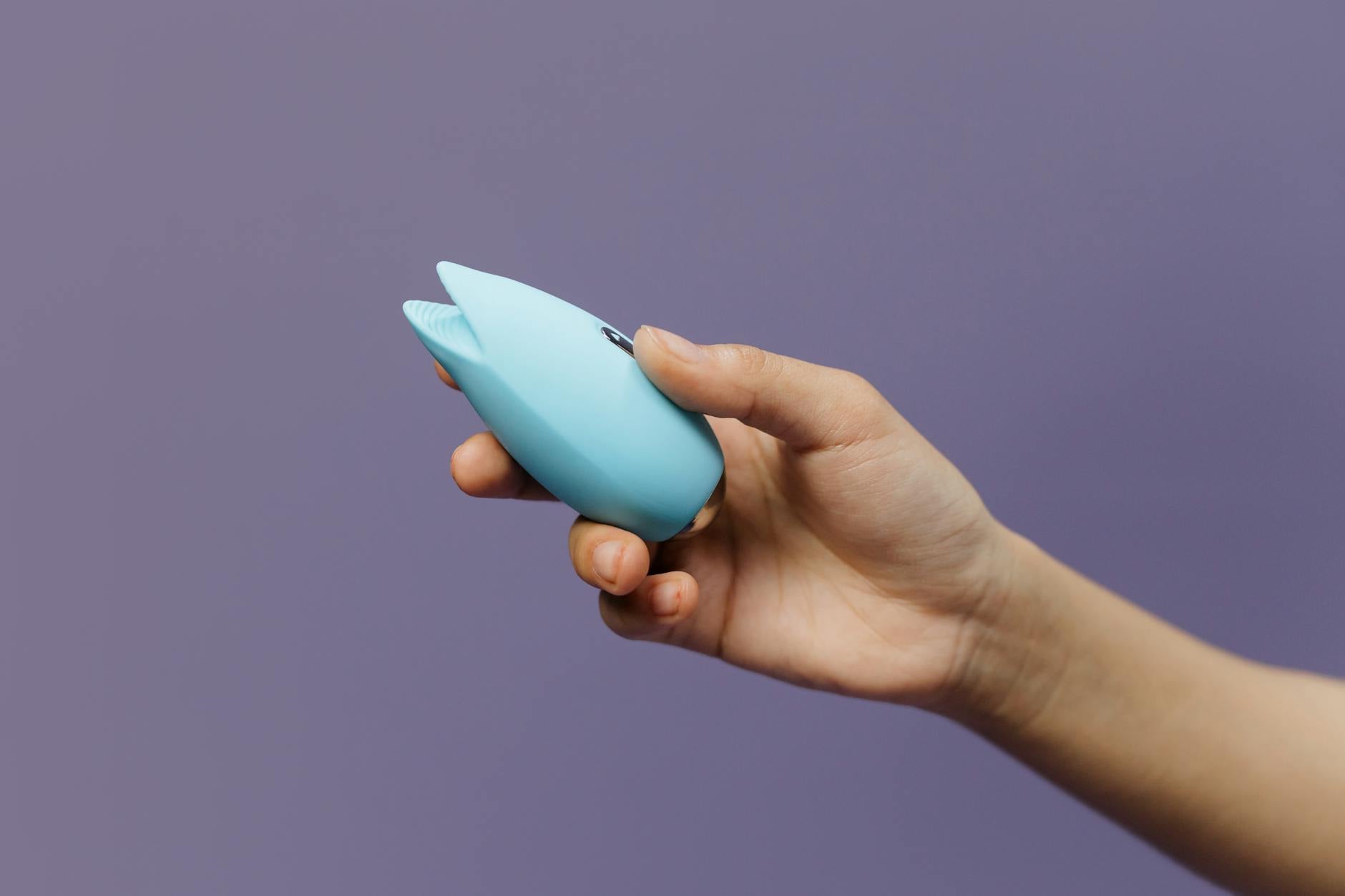
A lemon vibrator like the Lem works because it gives your clitoris a consistent, predictable sensation that doesn't depend on your partner's mood, schedule, or current preference. That consistency is powerful when everything else feels uncertain.
The suction-based stimulation on a clitoral vibrator is different from your partner's touch. It's not trying to replicate what they used to do. It's introducing something entirely separate from the partnership dynamic. That boundary matters. You're not comparing it to what you've lost. You're discovering what feels good right now, in this chapter.
When you use a lemon vibrator solo, you're also rebuilding your own pleasure map. You're reminding your nervous system that you can generate arousal on your own terms. That you don't need to wait for conditions to be perfect or for someone else to want the same thing at the same time.
That's not about replacing partnership. It's about having your own ground to stand on while you navigate what's changing.
The practical setup for reconnecting with sensation
Here's how I recommend you start.
Choose a time when your partner isn't home or isn't around. Not because what you're doing is shameful. But because you need mental space to focus on sensation without half your brain wondering if they're going to come through the door. You can't rebuild your pleasure map if you're simultaneously managing their presence.
Set a timer for 20 minutes. Yes, really. When you're feeling uncertain about your body's capacity, a specific timeframe helps you stay present instead of anxiously checking whether something's happened yet. You're not racing toward an outcome. You're exploring.
Start with your lemon vibrator on a low setting. Let it warm up the area without immediately chasing intensity. You might find that the build is actually longer now because your nervous system needs time to downshift from protective mode. That's fine. Let it take 10, 12, even 15 minutes of exploration before you increase the intensity.
Pay attention to what feels good without judgment. Are you drawn to a particular pattern? Does the sensation feel better when you're breathing deeply or when you're focused? Are you noticing any spots that feel especially responsive? You're collecting data about your own pleasure, not trying to achieve anything specific.
When you finish, don't immediately jump into the next thing. Sit with it for a few minutes. Notice what you feel: pleasure, relief, sadness, anticipation, nothing in particular. All of that is useful information.
How to talk to your partner about what's shifted
Using a clitoral vibrator solo doesn't solve the partnership problem. But it does change the conversation you need to have.
Instead of approaching your partner from a place of deficit ("You don't want to touch me the way you used to"), you're coming from information ("I'm noticing my body responds differently now, and I want us to figure this out together"). One conversation is reactive and resentful. The other is collaborative.
You might say something like: "I've been thinking about how our intimacy has shifted. I want to understand what's changed for you and what you need from me. And I want to ask if we could explore some new ways of connecting that work for both of us right now."
If your partner is interested in using the clitoral vibrator together, that's one conversation. If they're not, that's a different one. But you're not asking them to change. You're inviting them to shift along with you.
When partner preference shifts have a deeper cause
Sometimes a partner's changing preferences signal something bigger: shifting attraction, unresolved resentment, depression, or a mismatch in values around intimacy itself. Those conversations deserve time and possibly a couples therapist.
A lemon vibrator isn't a substitute for those conversations. But it does give you something important: proof that your clitoris still works, that your pleasure is still accessible, and that you're not responsible for your partner's desire.
If the preference shift coincides with other changes in the relationship, honesty is the only path forward. But honesty works better when you're not questioning your own body in the process. Solo exploration with a tool like a lemon clitoral vibrator helps you separate those two conversations.
Rebuilding pleasure as a couple
Some partners are actually relieved to have a lemon vibrator in the bedroom. It takes some of the pressure off them to deliver a specific kind of stimulation. It can become something you use together: they might enjoy watching, or you might take turns. It might be part of foreplay, or something separate and equal.
The key is asking, not assuming. "Would you be interested in exploring this with me?" is very different from handing them a toy and expecting them to know what to do with it.
If you do bring a clitoral vibrator into partnered sex, remember that your clitoris might respond differently when someone else is in the room. You might feel more exposed, or less focused. You might need something different from them during or after. That's not a failure. That's you learning what you actually need in this new configuration.
What matters is that you're being intentional about what you want instead of resigned to whatever's available. That's the real shift.
FAQ: Navigating clitoral sensitivity and partner preference changes
Why does my clitoris feel less sensitive since my partner's preferences changed?
Your clitoris hasn't lost sensation. Your nervous system has shifted into a more cautious mode because the reliable pattern you depended on is no longer there. Anxiety and uncertainty genuinely blunt arousal, even when the physical anatomy is unchanged. Rebuilding sensation often means rebuilding trust in the situation first. A lemon vibrator helps because it creates a dependable sensory experience outside the relationship dynamic.
Can I use a lemon vibrator if my partner has lost interest in sex altogether?
Absolutely. And you might want to do it solo at first. Using a clitoral vibrator independently helps you maintain your own relationship with pleasure, which is actually crucial for long-term partnership health. You're not trying to seduce them or prove anything. You're maintaining yourself. When you're grounded in your own pleasure, you're also less resentful about what's missing in the partnership. The conversation becomes easier.
Should I tell my partner I'm using a vibrator?
That depends on your relationship and your comfort level. Some couples are fully transparent about solo exploration. Others maintain privacy around individual pleasure. There's no universal right answer. What matters is that you're not hiding it because you feel ashamed. If you're keeping it secret because you feel like you "shouldn't" want pleasure, that's worth examining. If you're keeping it private simply because it feels like your own space, that's fine.
What if my partner feels threatened by me using a lemon vibrator?
That's a conversation worth having directly. Sometimes partners interpret vibrator use as rejection. Sometimes it triggers their own insecurities about desire or performance. Those are real feelings that deserve to be heard. At the same time, your pleasure is not a threat to the partnership. You might need to help them understand that using a clitoral vibrator is about reclaiming your own sensation, not about preferring it to them. A couples therapist can help facilitate that conversation if it's contentious.
How often should I use a lemon vibrator when my partner's preferences have shifted?
There's no formula. Some people find weekly solo time with a vibrator helps them feel grounded. Others do it daily. What matters is that you're not using it as a replacement for addressing the actual relationship shift. If you're using it constantly to avoid the conversation you need to have with your partner, that's a sign you're both ready to talk. If you're using it as part of your regular self-care routine, that's healthy and normal.
Can a lemon vibrator actually help rebuild desire in my partnership?
Yes, but indirectly. When you're more connected to your own pleasure and less resentful about what's changed, you often become more present with your partner. You're not performing or braced for disappointment. You're more genuinely there. That shift in presence can actually reignite connection. But it only works if you're also doing the relational work of understanding what's shifted and why.
The real work happens in both places
Your clitoris is still responsive. Your capacity for pleasure is still there. What's shifted is the context, and context matters enormously. When you reconnect with your own sensation through a lemon vibrator, you're not abandoning your partnership. You're giving yourself solid ground to stand on while you both figure out what intimacy looks like now.
The vibrator is a tool for that process, not a Band-Aid. Use it to remind yourself that pleasure is still accessible. Use it to gather information about what your body actually needs. And then use that information to have a real conversation with your partner about where you both want to go.