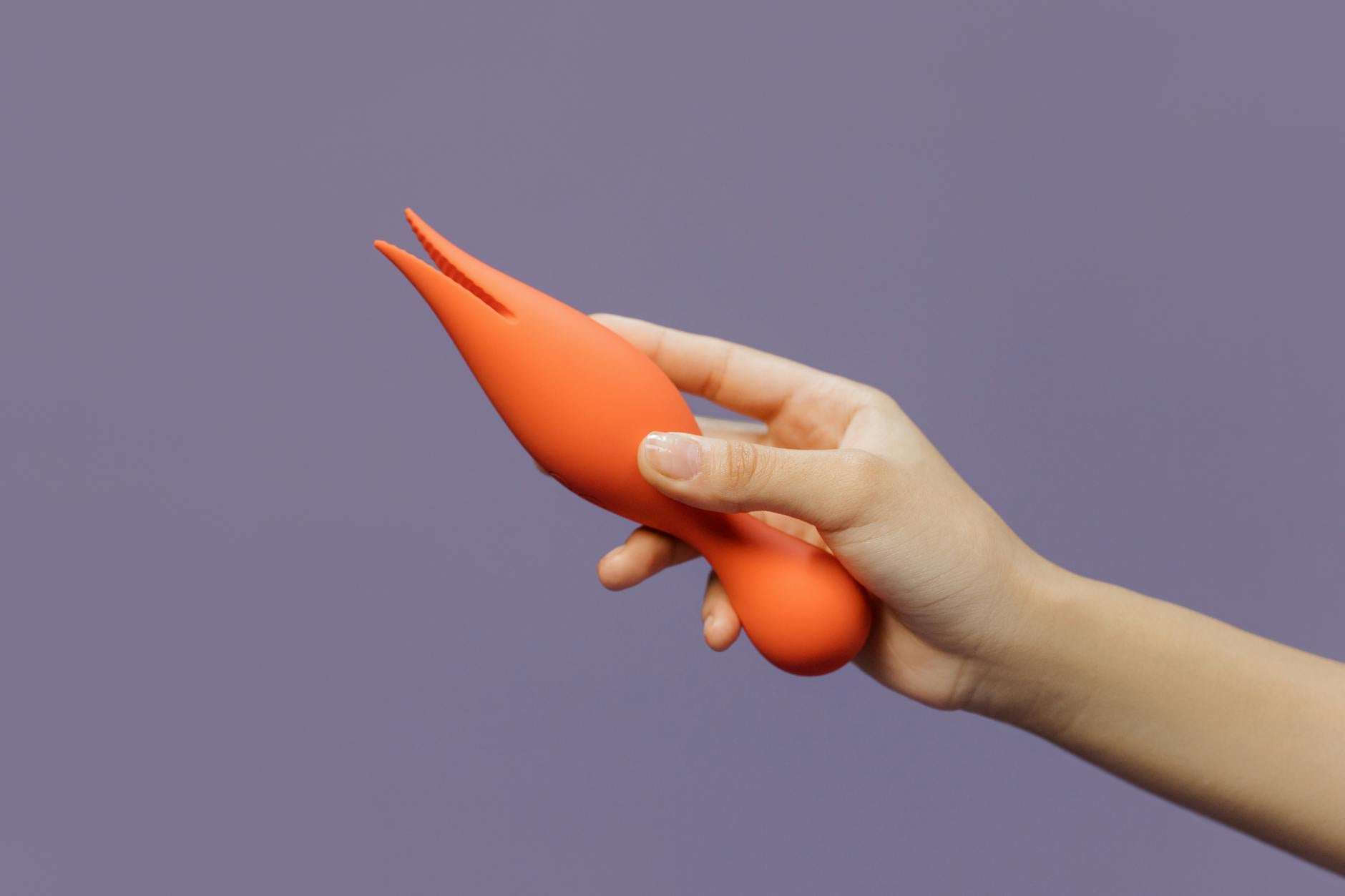
Let's talk about sensitive pleasure
Here's the thing. When someone tells me they can't use a vibrator because they're too sensitive, what they usually mean is: "I tried one once, the sensation was overwhelming, and I decided vibrators weren't for me." But sensitivity isn't a disqualification. It's information.
A lemon vibrator, specifically, is one of the best options for sensitive bodies because air-suction technology works differently from traditional vibration. It doesn't buzz directly against your tissue. Instead, it creates a gentle rhythmic pulse that pulls rather than presses. For many sensitive people, that distinction changes everything.
Why sensitivity happens (and it's not your fault)
Sensitivity to touch has several sources, and they're worth untangling because they affect your approach.
Neurological sensitivity. Some nervous systems are just wired to amplify sensation. This is often called sensory processing sensitivity, and it's not rare. About 15-20% of people have this trait. Your nerve endings aren't damaged or wrong. They're just loud.
Hormonal shifts. Estrogen affects how sensitive tissue feels. During certain cycle phases, or during pregnancy, postpartum, or menopause, the same vibrator that felt fine three months ago might feel too intense.
Touch aversion and trauma. If you've experienced sexual trauma, medical trauma, or certain types of anxiety, your nervous system may perceive vibration as a threat. This is a protective response, not a personal failure. It also means you need a slower, more consent-based approach.
Vulvodynia and pain conditions. Some people have chronic pain in genital tissue that makes direct stimulation painful. A lemon vibrator's suction approach can help here because it distributes pressure over a larger area rather than concentrating it.
Understanding which bucket you're in matters because the strategy changes. A hormonally sensitive person might just need to adjust their timing. A trauma survivor needs something entirely different: permission, control, and slow reintroduction.
The lemon vibrator advantage for sensitive bodies
Why suction works better than traditional vibration for sensitive people comes down to physics and sensation.
A standard vibrator creates a rapid back-and-forth motion. Depending on the pattern and intensity, this can feel sharp, overstimulating, or even painful on sensitive tissue. Your nervous system perceives it as constant micro-impacts, which can trigger a defensive response.
A lemon clitoral vibrator uses air-pulse technology. Instead of vibrating, it creates a gentle suction rhythm that feels more like a pulsing sensation than a buzz. It's rhythmic without being harsh. The sensation is also distributed across a wider area because of how the cup seals, which means less concentrated intensity on the most sensitive part of your clitoris.
This is why people who've had bad experiences with traditional vibrators often find air-suction devices completely different. And if you're already sensitive, starting with this technology is smarter than fighting your way through a conventional vibrator.
How to start: the gradual protocol
If you're sensitive and skeptical, follow this sequence. Don't skip steps.
Day 1: No stimulation yet. Hold the lemon vibrator. Look at it. Turn it on at its lowest setting without any contact. Listen to the sound. Let your nervous system get familiar with it existing. This sounds silly, but for trauma survivors especially, this matters. You're training your brain that this object is safe before you integrate it.
Day 2-3: External touch only. Turn on the lowest setting and touch it to your outer labia, your thighs, your pubic bone. Not your clitoris. Let the sensation travel through your body without concentrating it. Notice where you feel pleasure without overwhelm. For some people, the outer edge of the labia or the mons pubis is where magic happens without the intensity.
Day 4-5: Indirect clitoral contact. Rest the device over the clitoral hood (the skin that covers your clitoris) rather than directly on the clitoris itself. This is the move that transforms the experience for sensitive people. You get all the benefits with 30-40% of the intensity.
Week 2 onward: Direct, gradual contact. Only when you're ready and wanting it, move to direct contact. Stay on setting 1 or 2. Observe. Does your nervous system feel curious or defensive? If curious, great. If defensive, go back to the hood. There's no timeline here.
Layering sensation for sensitive bodies
Instead of turning up the intensity, layer other sensations. This is how sensitive people often reach deeper pleasure.
Breathing. Use pattern breathing. Inhale for 4 counts while the device pulses, exhale for 4 counts. This anchors your nervous system in the present and prevents the spiraling overwhelm that can happen with sensitivity.
Partnered touch. If you have a partner, ask them to touch your breasts, your neck, your inner arms while you use the device. Distributed pleasure across the body is often less overwhelming than concentrated clitoral stimulation alone. It also signals to your nervous system that this is safe, intimate, connected.
Mental focus. Sensitive people often get caught in monitoring mode: "Does this feel good? Is this working? Should I feel more by now?" That monitoring creates tension, which makes everything feel more intense. Instead, try counting: count your breaths, count the pulses of the device, focus on any sensation of warmth or expansion. This keeps your brain busy enough to stop the anxiety loop.
Lubrication. Use generous amounts of water-based lubricant. This creates a buffering layer that softens sensation. Some sensitive people need this every single time. That's not weakness. That's self-knowledge.
Photo by Madison Inouye on Pexels
When to adjust your settings
If the lowest settings still feel like too much, you have options beyond just powering through.
First: reduce contact time. Use it for 3-5 minutes, then take a 2-minute break. Reintroduce it. Short, frequent sessions often work better for sensitive nervous systems than long, sustained ones.
Second: consider purchasing a lower-intensity device. Not all suction vibrators are created equal. Some are gentler than others. The Lem from Hello Nancy, for instance, has 5 distinct settings. Starting on setting 1 is genuinely mild. But if you know you're extremely sensitive, there's no shame in asking the Hello Nancy team about which device might suit you before you order.
Third: use your device over clothing or a thin barrier. A soft cotton underwear layer between your body and the device can reduce intensity by 40-50%. Yes, it's less direct. But it's also exploration, not failure.
Fourth: accept that some days are more sensitive than others. Hormonal cycles, stress, how rested you are, and your mood all shift your threshold. If something that felt great last week feels too much today, that's not regression. That's adaptation. Check in with your body, adjust, and try again tomorrow.
Reframing sensitivity as information
Most of the guilt around not being able to handle standard vibrators comes from a narrative that goes like this: "If I were normal, I'd be able to use this without thinking twice." That narrative is wrong.
Sensitivity isn't a threshold to overcome. It's a feature of your nervous system. Some of the most resilient, intuitive, empathic people I work with are sensitive to stimulation. They process more information, feel more texture, and often experience pleasure more fully once they stop fighting their own wiring.
A lemon vibrator works for sensitive people because it respects how your body actually responds, rather than demanding that you mold yourself to a standard intensity. You're not less sexual because you need lower settings. You're not broken because you need more time. You're just learning the language of your own pleasure.
Once you crack that code, sensitivity becomes an asset. You notice nuance. You feel connection. You experience sustained pleasure that builds slowly but lasts.
FAQ: Sensitivity and clitoral vibrators
Q: Can sensitivity get worse if I keep using a vibrator? No. Continued exposure to the device at a level your nervous system can handle actually desensitizes the overwhelm response over time. The key is "at a level your nervous system can handle." Pushing past your threshold doesn't build tolerance. It builds defense mechanisms.
Q: Will numbing cream help me use a regular vibrator instead of switching to suction? No. And I'd advise against it. Numbing the sensation isn't solving the problem. It's just muting feedback from your body. You want to feel what you're feeling, understand it, and work with it. Suction vibrators are genuinely a better tool for sensitive bodies, not a workaround.
Q: Is sensitivity related to having a smaller clitoris? Not necessarily. Clitoral size and sensitivity are separate traits. That said, people with smaller or more internal clitori sometimes find suction devices more effective because the cup creates better contact, regardless of sensitivity.
Q: What if I have numbness in my clitoris instead of sensitivity? That's a different concern and worth discussing with a gynecologist. But in general, air-suction devices are often more effective than vibration for people with numbness because the pulsing sensation is more distinctive than a buzz. They create more differentiation between stimulated and non-stimulated states.
Q: Can I use a lemon vibrator if I have vaginismus or pelvic floor dysfunction? Yes, but with care. Vaginismus and sensitivity often overlap. Work with a pelvic floor physical therapist in parallel. The vibrator can be part of gradual desensitization, but it shouldn't be your only tool. The professional guidance matters here.
Q: How long does it take to feel comfortable with a clitoral vibrator after sensitivity issues? Everywhere from two weeks to six months. There's no standard. Some people crack it in a few sessions once they have the right device and protocol. Others need months of gentle reintroduction, especially if trauma is involved. Both are completely normal. Pace yourself. Your pleasure isn't time-sensitive.
The next step
If you're sensitive and you've been avoiding vibrators, or if you've tried them and walked away disappointed, air-suction technology from Hello Nancy might genuinely change your approach. The lemon vibrator specifically is designed with multiple gentle settings precisely because the people who build it understand that sensitivity is real.
Start low. Go slow. Layer sensation. Breathe. And remember: the goal isn't to feel like everyone else. The goal is to feel like yourself, fully, on your own terms.
Still have questions about whether a clitoral vibrator fits your body or needs? Get in touch with Hello Nancy and describe what you're working with. The team is trained to match you with the right device, not to push you toward the loudest or most intense option.