
Let's start with the real thing
Age gaps in relationships aren't a problem until they become one in bed. And here's what nobody tells you: the problem is rarely the gap itself. It's the mismatch between two different bodies operating on two different timelines, and the shame that comes when you assume it means something is broken.
It doesn't. It means you're two different people, and you need different things. A lemon vibrator isn't a workaround for that difference. It's permission to stop pretending you're the same.
What actually changes with age and sensation
Let's be specific about the physiology. As bodies age, several things shift gradually over time:
- Arousal takes longer to build. The cardiovascular system takes more time to prime. Blood flow to erogenous zones is still there, but it's less urgent.
- Tissue sensitivity can flatten. This isn't universal, but thinner skin and lower estrogen (in any body with ovaries, regardless of age) means some areas become less responsive to light touch.
- Orgasm feels different. Stronger muscles don't always mean stronger contractions. Sometimes it means more concentrated, sometimes more diffuse, sometimes harder to locate.
- Recovery time extends. The refractory period between orgasms gets longer. This is a fact, not a failure.
Here's what doesn't change: the clitoral nerve density, the brain's capacity for arousal, or the ability to experience intense pleasure. Age doesn't erase desire. But it does shift the timeline.
When partners are significantly different ages, that timeline mismatch becomes visible. One person might be ready to go in five minutes. The other needs twenty. One person orgasms easily. The other needs sustained, focused stimulation. Neither is wrong. They're just different.
Why desire itself gets tangled up in age gaps
The real friction isn't usually physical. It's psychological.
The younger partner sometimes feels they're responsible for "keeping up" sexually. The older partner worries they're not attractive anymore, that they're disappointing someone. Both of these create performance pressure, which destroys arousal faster than anything biological.
Adding to this: many people internalize the idea that sexual desire should be equal and synchronized. When it isn't, shame arrives quickly. "Why don't I want him as much?" "Am I getting old?" "Is she losing interest in me?" These questions poison the actual experience.
Here's the truth: desire is rarely synchronized even in same-age couples. Age gaps just make the natural variation more obvious.
How a lemon clitoral vibrator changes the conversation
A lemon vibrator (or any good clitoral suction device) does three specific things for age-gap couples:
1. It separates sensation from timing. Instead of waiting for both partners to be equally aroused at the same moment, one person can get there independently. The pressure to synchronize disappears.
2. It creates a shared ritual. Using a lemon vibrator together transforms from "you're too slow" or "I'm too old" into "we're exploring this together." That psychological shift rewires the entire experience.
3. It bypasses the neurological changes that come with aging. Air-suction technology (like the Lem) doesn't require the same nerve responsiveness as direct friction. It stimulates different neural pathways, which means an older partner can experience intense sensation even if lighter touch feels muted.
When the older partner uses a lemon vibrator during partnered sex, it often feels radically different from what they expected. They're not trying to "catch up." They're accessing pleasure directly.
Practical setup for age-gap couples
Four things I recommend almost always:
Start with solo exploration first. Before bringing it into partnered sex, each of you should spend time alone with a lemon vibrator. This removes the performance anxiety. You're not performing for anyone. You're learning what your own body actually wants right now, at this age, in this life.
Don't position it as a supplement to "real" sex. Language matters here. If the older partner says "I guess we need this now," the message is "my body is failing." Reframe it: "I want to add this to what we're already doing because I love how it feels." Completely different story.
Build it into foreplay, not as a replacement. A lemon vibrator works brilliantly during partnered touch. One partner can use it while the other is inside them, or while touching other areas. It's additive, not substitutive.
Adjust the rhythm to match both partners. The younger partner might want intensity right away. The older partner might need the lemon vibrator to warm them up first. Let the tool set the pace, not your assumptions about what "should" happen.
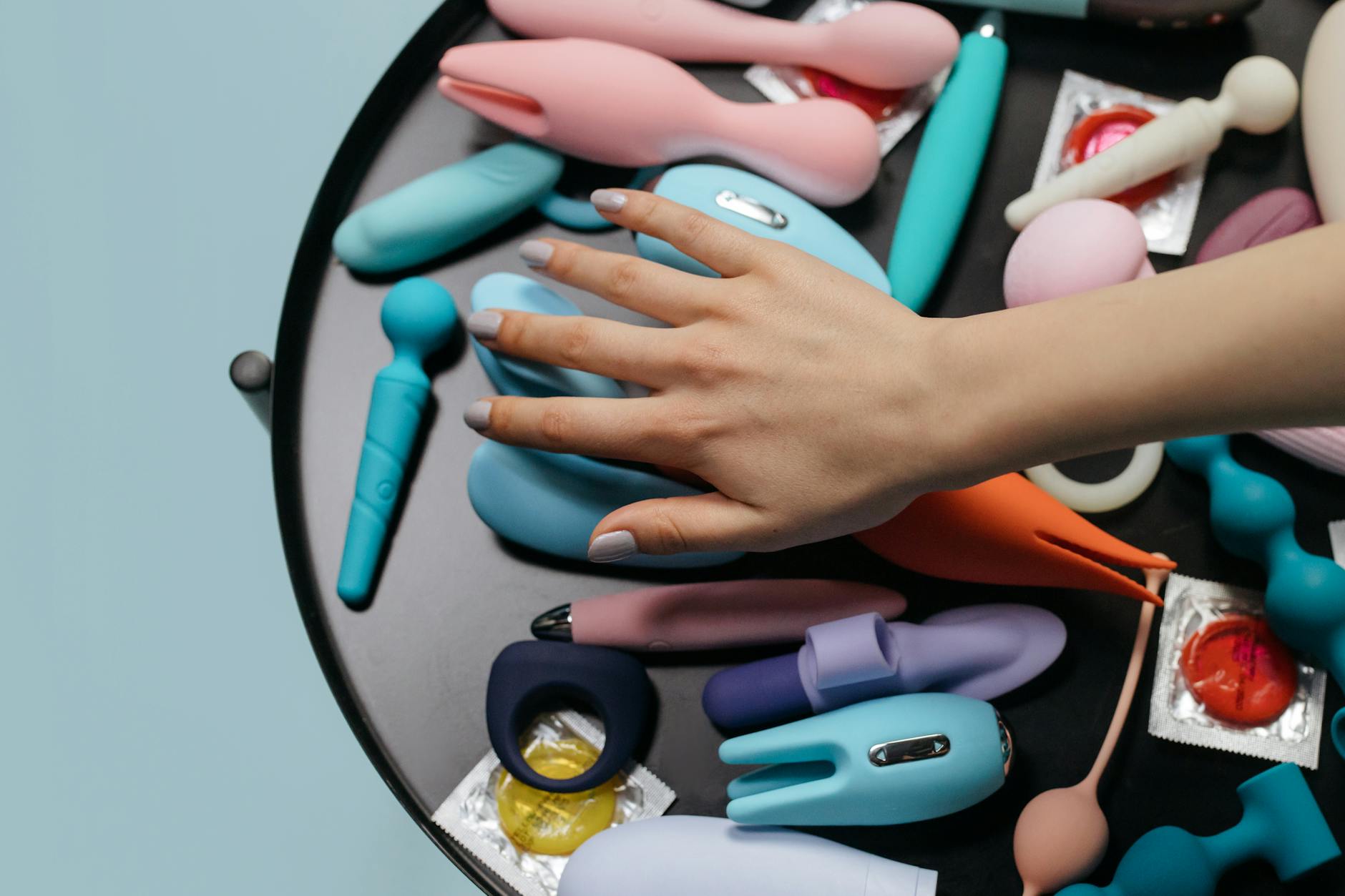
Photo by cottonbro studio on Pexels
The emotional part (this matters more than the technique)
Using a lemon vibrator in an age-gap relationship only works if you both agree on what it means. And what it means is not "one of us is broken."
What it actually means: "Our bodies are different, and we're choosing to work with that instead of against it."
If the older partner feels ashamed, the vibrator won't help. If the younger partner feels they're "settling," the vibrator won't help. The tool only works when both people have decided that pleasure matters enough to be honest about what they actually need.
In age-gap relationships, that honesty is often complicated. There might be power dynamics at play, conscious or not. The older partner might feel like they have something to prove. The younger partner might be afraid of seeming inexperienced or demanding. These are normal things to work through.
But they need to be worked through separately from the sex itself. If you're using a lemon vibrator to paper over a deeper incompatibility or resentment, it won't work. It will just make the resentment more visible.
When sensation differences point to something else
If the older partner has recently lost sensation that used to be there, that's worth investigating with a doctor. Sudden changes in sexual sensation can signal thyroid issues, diabetes, medication effects, or hormonal shifts that benefit from treatment.
But gradual changes over years? That's aging. It's normal. It requires adjustment, not alarm.
What desire actually looks like across an age gap
Honestly though: some of the most satisfied couples I've worked with have age gaps of ten, fifteen, twenty years. Not because they found some magic solution. But because they stopped trying to have the same desire and started asking: What does desire actually look like for us, together, right now.
Sometimes that answer includes a lemon vibrator. Sometimes it means rethinking when you have sex. Sometimes it means admitting that the older partner wants sex differently now, and that's completely fine.
The tool doesn't fix the mismatch. But it does create space for the conversation.
FAQs on lemon vibrators and age-gap intimacy
Does using a vibrator mean my partner isn't attracted to me anymore?
No. In age-gap relationships especially, a vibrator often means the opposite. It means your partner wants to be with you in a way that actually works for both your bodies. Using a lemon clitoral vibrator together is an investment in pleasure, not a rejection of it. It's choosing to be present instead of pretending to be somewhere else.
Will my partner think I'm too old if I need a vibrator?
If your partner thinks needing stimulation is an age thing, they've fundamentally misunderstood vibrators. People of all ages use them. The difference is that age-gap couples sometimes feel pressure to pretend their bodies work the same way. A vibrator removes that pretense. If your partner judges you for that, the issue isn't the vibrator.
What if my partner is older and seems less interested in sex than they used to be?
Desire often changes with age, yes. But so does the kind of touch that creates desire. What worked at thirty might not work at fifty. That doesn't mean desire is gone. It means the route to it is different. A lemon vibrator can help map that new route. The key is asking directly: "What do you actually want? Not what you think you should want, but what feels good right now."
Can I use a lemon vibrator if I'm the younger partner and feel like I'm doing all the work?
Absolutely. If you're exhausted from trying to keep up with what you think your older partner needs, a vibrator redistributes the effort. It's not about them anymore. It's about your pleasure too. That's actually the whole point.
How do I bring this up without making my partner feel bad?
Lead with curiosity, not diagnosis. "I want to try using this together because I think it would feel amazing for both of us" is different from "I want to use this because you're not responding fast enough." The second version creates shame. The first creates possibility. How to Introduce a Lemon Vibrator for Foreplay With a New Partner has more language patterns that work.
What if one of us likes it and the other doesn't?
That's useful information. But the question isn't "is there something wrong with this toy?" It's "what does this teach us about what we each actually like?" Maybe one partner loves it solo and never wants it partnered. Maybe the other person prefers something different entirely. Age-gap relationships that work do this well: they let each person want what they want without judgment. A vibrator is just a tool for figuring that out.
The real thing about aging and desire
When people ask me about age gaps and sex, they're usually asking: Will we still want each other when our bodies change? The answer is simple. Yes. But not in the same way. And that's not loss. It's information.
A lemon vibrator doesn't make you young again. It doesn't erase the physical differences between two bodies at different life stages. It does something better. It says: Your pleasure matters exactly as it is right now. Your body is enough. What we have together is enough. We're just getting better at it.
That's worth a lot more than pretending everything stays the same.
Ready to explore what actually works for your body and your partnership? Start with a lemon clitoral vibrator designed for precision and comfort, then have the actual conversation about what you both want. Your future self will thank you for the honesty.
References & Sources
- Gottman, J. M., & Silver, N. (2015). The Seven Principles for Making Marriage Work. Harmony.
- American College of Obstetricians and Gynecologists. (2023). "Sexual Health and Aging." ACOG Patient Education.
- Kingsberg, S. A., & Woodard, T. (2015). "Female Sexual Dysfunction: Focus on Low Desire." Obstetrics & Gynecology, 125(2), 477-486.
- Shifren, J. L., et al. (2008). "Sexual Problems and Distress in United States Women: Prevalence and Correlates." Obstetrics & Gynecology, 112(5), 970-978.