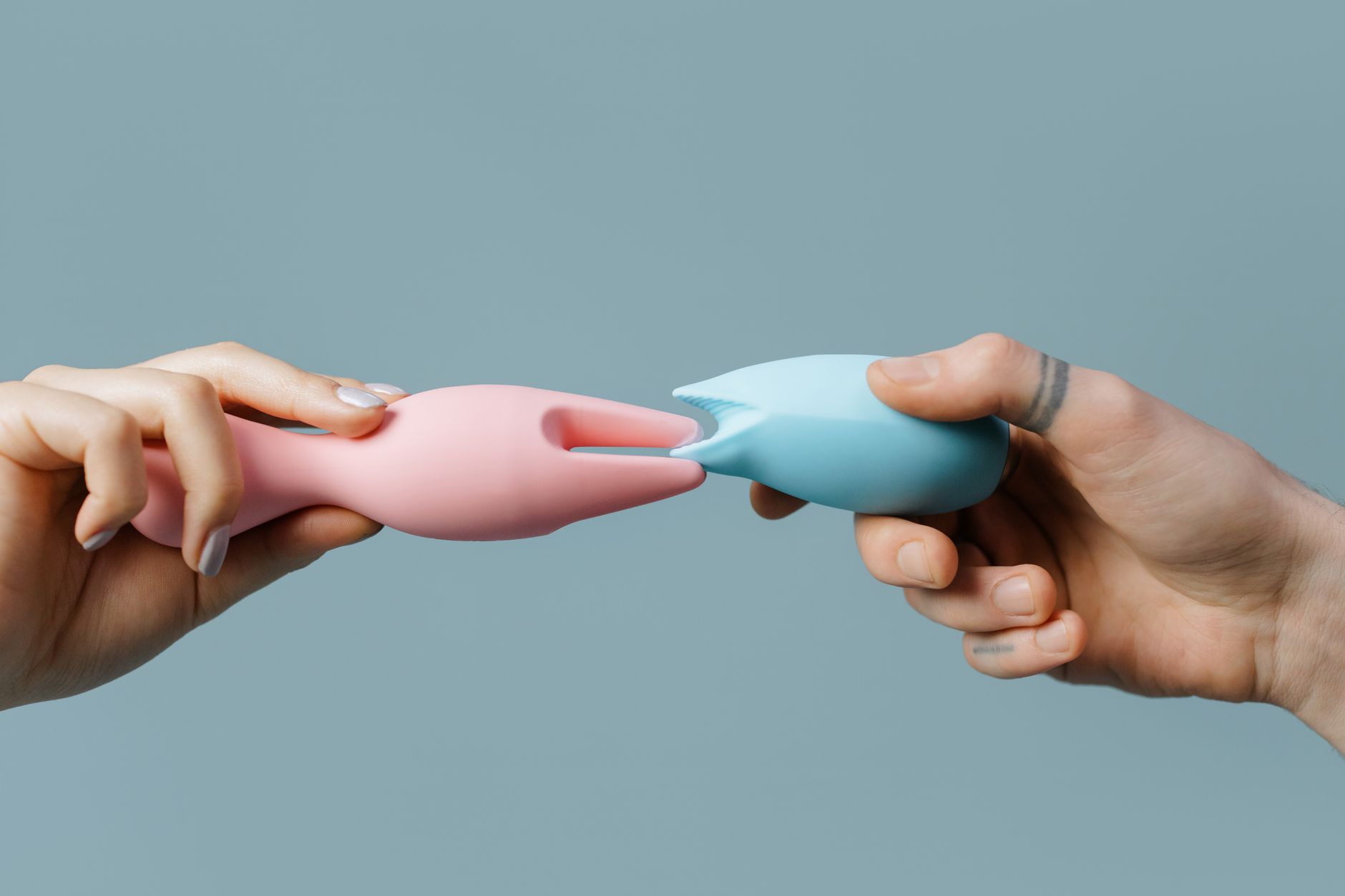
Let's be real: anxiety is a pleasure killer.
Your mind is racing through a to-do list. Your shoulders are up by your ears. Your breath is shallow. And the idea of having an orgasm? It feels about as likely as winning the lottery. Anxiety doesn't just dampen arousal. It shuts the whole system down before anything even starts.
Here's the thing nobody tells you: anxiety and arousal can't coexist in the same nervous system at the same time. Not because there's anything wrong with you, but because they're governed by different branches of your nervous system. When your sympathetic nervous system (the stress branch) is activated, your parasympathetic nervous system (the rest-and-digest branch) takes a backseat. And arousal lives in parasympathetic space.
That's where a lemon vibrator comes in. Not as a magic fix, but as a tool that can help your body find its way back to calm.
How anxiety sabotages arousal from the inside
When you're anxious, your body does exactly what it's designed to do. Blood vessels constrict. Muscles tense up. Vaginal lubrication decreases. Clitoral tissue becomes less sensitive. Your body literally withdraws from the conditions needed for pleasure, because from an evolutionary standpoint, you're supposed to be fighting, fleeing, or freezing. Not orgasming.
The problem is that chronic anxiety keeps this system stuck in overdrive. Work stress doesn't resolve by bedtime. Relationship worries don't quiet down the moment you're alone. Financial pressure doesn't pause for intimacy. Your nervous system stays vigilant, and pleasure becomes impossible because your body isn't safe enough to open up.
Most people think the solution is to try harder. Push through. Ignore the anxiety and focus on sex. That almost always makes it worse. Forcing arousal when you're anxious is like trying to fill a bathtub with the drain open. You're working against your own physiology.
Why a lemon clitoral vibrator works differently
A lemon vibrator, particularly one using gentle suction technology, does something unusual. It doesn't demand arousal. Instead, it provides consistent, predictable stimulation that your nervous system can relax into.
Here's what happens physiologically: when you apply steady suction to the clitoris, you're creating a rhythm that your brain can track. Your nervous system recognizes this pattern as safe and non-threatening. Over time, as the parasympathetic nervous system gradually activates, blood flow increases. Lubrication returns. Sensitivity increases. Arousal rebuilds itself.
It's not about willpower or performance. It's about creating conditions where your body can feel safe enough to respond.
Starting with nervous system regulation first
Before you even touch the lemon vibrator, your nervous system needs a head start. Here's what works:
Deep breathing: Not the Instagram "breathwork" kind. Just slow, longer exhales than inhales. Breathe in for four counts, out for six. Do this for two minutes before anything else. Your exhale activates the parasympathetic nervous system more than your inhale.
Progressive muscle relaxation: Tense each muscle group for five seconds, then release. Start with your feet and work up to your face. This teaches your body what relaxation actually feels like when you've been anxious for hours.
Warmth: A hot bath, warm bed, or even just warm hands on your skin signals safety to your nervous system. Anxiety constricts blood vessels. Warmth opens them back up.
Slow movement: Gentle stretching or slow rocking motions help. Your nervous system interprets fast, jerky movements as threat. Slow movements say "we're safe."
Spend 10 to 15 minutes on nervous system regulation before you introduce any vibrator. This isn't foreplay. It's a reset.
How to actually use a lemon vibrator when anxiety is present
Once your body has started to settle, here's the protocol:
Start with the lowest setting. Not because you need to build up tolerance, but because a lower, steadier rhythm is more calming than an intense one. Intensity can feel threatening when your nervous system is still partially activated.
Apply the lemon vibrator to your clitoris using gentle, consistent suction. Don't think about orgasm. Seriously. Your only job is to notice sensation. Is this warm? Pulsing? Rhythmic? Can you feel your breath settling?
If your mind wanders back to anxiety, that's normal. Gently bring your attention back to physical sensation. What does the vibration feel like? Can you notice your heartbeat slowing?
This isn't about reaching orgasm. You're rewiring your nervous system to recognize that pleasure is possible even after you've been stressed. Some sessions will end in orgasm. Others won't. Both are wins.
The role of consistency over intensity
When anxiety blocks arousal, one powerful session rarely changes anything. But consistent, gentle practice over two to three weeks? That rewires things.
Use your lemon vibrator three to four times a week, always with nervous system regulation first. Your body will start to anticipate the shift from stress to calm. Your parasympathetic nervous system will strengthen its ability to activate on command. Arousal will return not because you forced it, but because your nervous system learned it was safe.
One client told me that after three weeks of this practice, she noticed her body responding to her partner's touch again. Not because she wanted to try harder. Because her nervous system finally had enough consistent evidence that she was safe.
When to involve a partner
If you're partnered, the conversation matters. Explain what you're doing and why. "I'm using this time to help my nervous system calm down so I can feel pleasure again. This isn't about you. It's about me rebuilding my capacity."
Some partners benefit from having their own role. Maybe they create the warm environment. Maybe they handle kids' bedtime so you have uninterrupted calm. Maybe they simply sit nearby and read, their presence a quiet anchor.
What doesn't work: partners trying to "help" by increasing pressure or intensity. That triggers anxiety further. Your job is to tell them clearly what helps and what doesn't.
What happens when you do this consistently
After two to three weeks, most people notice:
Arousal returns faster. Your body starts to recognize the setup (warmth, calm, lemon vibrator) and shifts into parasympathetic mode more readily.
Orgasms feel different. Not necessarily stronger, but more achievable. Your nervous system isn't fighting you anymore.
Anxiety during sex decreases. You start to trust that your body can handle pleasure and calm at the same time.
Pleasure extends beyond orgasm. You notice sensation and relaxation are valuable even without a climax.
This is why the lemon clitoral vibrator works for anxiety-blocked arousal. It's not magic. It's a tool that helps your nervous system find its way back to the conditions where pleasure is actually possible.
When anxiety is about relationship or deeper trauma
If your anxiety is rooted in partnership dynamics, past trauma, or deeper mental health challenges, a vibrator is a useful tool but not the whole answer. A lemon vibrator can help you rebuild physical sensation. It cannot process the relational or psychological roots of the anxiety.
If this resonates, talk to a therapist who specializes in somatic work or trauma-informed sex therapy. A vibrator plus professional support is often the winning combination.
FAQ: Anxiety and Arousal With a Lemon Vibrator
What if I feel more anxious when I use the vibrator?
Stop immediately. Your nervous system is telling you something. You might need more regulation time first, or you might need a different approach altogether. Start with just five minutes of breathing and warmth, with zero expectation of arousal. Sometimes the goal needs to be "calm body" before it becomes "pleasure."
Can using a lemon vibrator actually retrain my nervous system?
Yes. Neuroplasticity means your brain can build new pathways. When you pair the lemon vibrator with nervous system regulation consistently, you're literally teaching your brain and body a new association: this context equals safety equals pleasure. It takes repetition, but it works.
How long until I feel arousal returning?
It varies. Some people notice shifts in a week. Others take three to four weeks. The key is consistency, not intensity. If you're only trying once a week when you feel like it, progress will be slow. Daily or every-other-day practice accelerates the timeline.
Should I use the highest settings on my lemon vibrator right away?
No. When anxiety is present, intensity often feels threatening rather than pleasurable. Start at the lowest settings and only increase if it feels good. Your nervous system will tell you what intensity is right.
What if my partner thinks I'm avoiding them by doing this alone?
That's a conversation, not a vibrator problem. You might explain it like this: "I'm rewiring my nervous system so I can be more present with you. This is me investing in us." Some partners get it immediately. Others need reassurance. Be clear, be specific, and set expectations about timeline.
Can I use my lemon vibrator during partnered sex if anxiety hits during?
Absolutely. Using your vibrator alongside partnered sex can help ground your nervous system. The familiar sensation and rhythm create an anchor. Some people find this allows them to stay present and aroused when anxiety would otherwise derail them.
The lemon vibrator isn't a band-aid for anxiety. It's a tool that helps your body remember what calm, pleasure-capable feels like. Use it with intention, consistency, and patience, and you'll likely find your way back to arousal more reliably than you expected.
If you need more support navigating anxiety and intimacy, let's talk. /contact