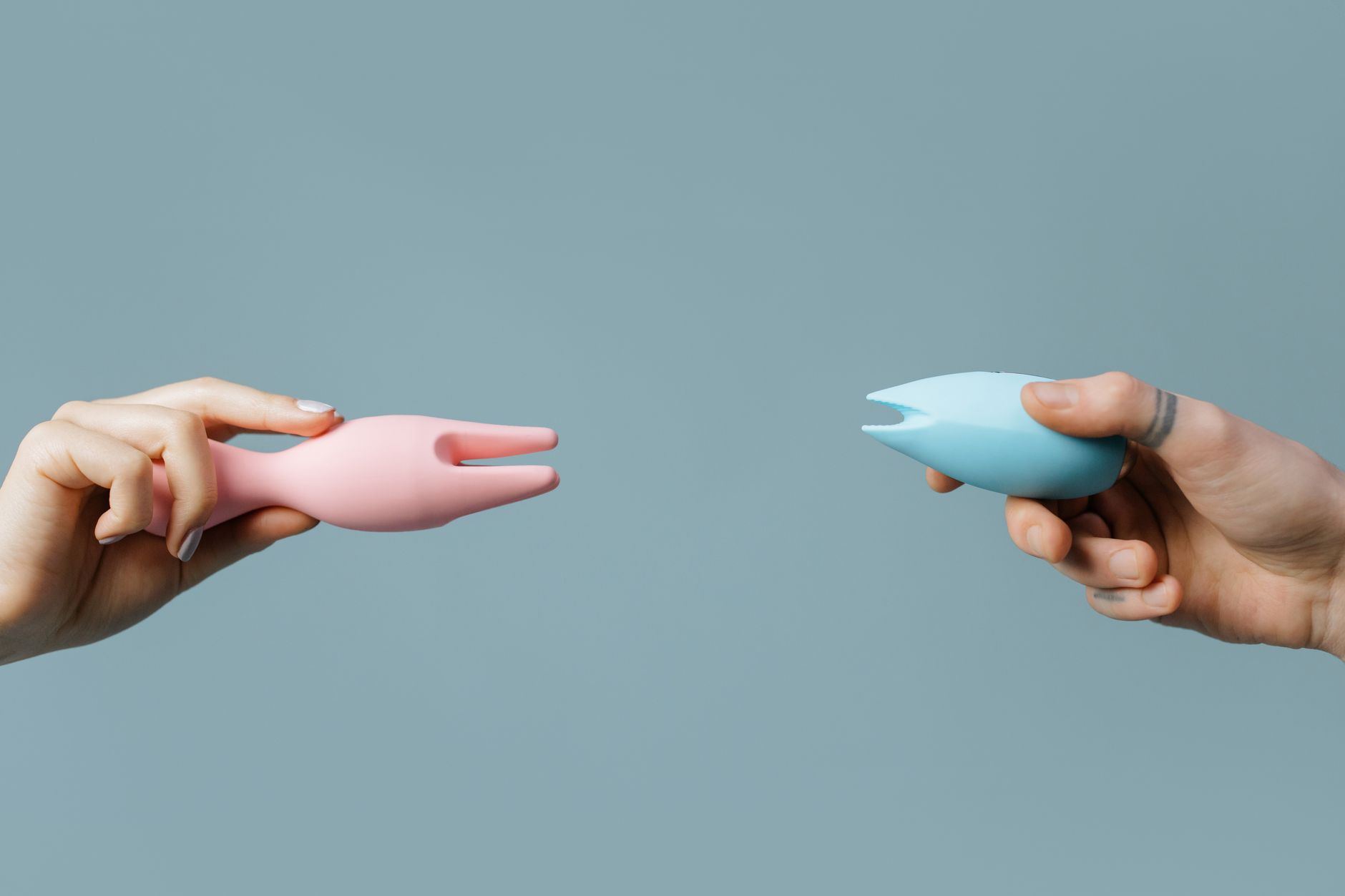
Let's start with the real thing
Intimacy can feel heavy. Maybe you're recovering from a rough season in your relationship. Maybe you've been through something that rewired how you experience touch. Maybe you're just tired of the pressure to want something you're not sure you want right now. Whatever the reason, when building intimacy feels like a chore instead of a choice, your nervous system isn't going to cooperate.
That's where solo exploration comes in. And specifically, where a lemon clitoral vibrator like the Lem can reset the whole equation.
Why pressure actually breaks desire
Here's the thing about intimacy and overwhelm. Your brain is the largest sexual organ. When it's running a background script like "I should want this" or "My partner expects this" or "I'm broken if I don't feel ready," the actual physical machinery downstairs gets the memo. Arousal needs permission. It needs safety. It needs zero stakes.
When you introduce a lemon vibrator into solo play, you're removing the relational weight. There's no performance. No timeline. No checking in with someone else's expectations. You get to learn what actually turns you on right now, in this season of your life, without commentary.
Many of my clients tell me that the first time they felt desire again wasn't during partnered sex. It was alone, with a vibrator, no agenda, just curiosity.
The solo warm-up approach
If intimacy feels heavy, jumping straight into partnered sex is usually a mistake. You need to rebuild the neural pathway between your body and pleasure first. That's the whole job of a lemon clitoral vibrator in this phase.
Start with a simple ritual. Not candlelight and rose petals if that feels performative. I mean something genuinely low-key: close your bedroom door, put your phone in another room, set 15 minutes on a timer. This isn't about checking a box. It's about telling your nervous system "this time is just for you."
Use a water-based lubricant. Even if there's no dryness, the glide makes everything feel less urgent and more exploratory. Start the Lem on the lowest setting. You're not chasing an orgasm. You're noticing what happens when there's no pressure.
What to notice (spoiler: it's not always pleasure)
Sometimes when you first reconnect with your body after a period of overwhelm, what surfaces isn't arousal. It's frustration. Numbness. Sadness. Anger. These are all normal and all valid. They're not obstacles. They're information.
If you notice tightness in your pelvic floor, ease off the vibrator and just breathe. You can place a hand on your lower belly and breathe into it. If you notice your mind drifting, that's not a failure. Your nervous system is still in protection mode.
Keep showing up anyway. Not with force. With consistency. Five minutes a few times a week is better than pushing yourself for 20 minutes once. You're teaching your body that pleasure is safe again, and that takes repetition.
Many people find that using a lemon sucker vibrator this way transforms not just how they feel about solo sex, but how they feel about partnered intimacy too. The pressure lifts because you already know you can access pleasure. It's not conditional on someone else.
Progression without pressure
As you get more comfortable, you can move from the lowest setting to exploring the middle ranges. The Lem has multiple patterns because different days, different moods, and different nervous system states respond to different things. On a day when you're stressed, a gentle pulse might be perfect. On a day when you're feeling more energized, a faster pattern might feel better.
Notice which patterns bring you closer to arousal and which ones don't. This isn't trial and error. It's research. You're learning your own pleasure architecture, which sounds clinical but is actually the opposite. It's you becoming an expert on your own body.
If you're eventually going to rebuild intimacy with a partner, this solo knowledge is everything. It removes the pressure for them to guess what you want. You already know.
When to bring a partner back in
There's no timeline for this. Some people need weeks. Some need months. You know when it's time because the idea of your partner touching you shifts from "I should" to "I want to know if they'll." That's the signal.
When you do start rebuilding partnered intimacy, you don't have to hide the vibrator. Many couples find that incorporating a lemon clitoral vibrator into partnered sex actually takes pressure off both people. Your partner doesn't have to be your only source of stimulation. You two aren't performing a script. You're exploring together.
Honest conversation helps here. "I've been using the Lem because pressure was shutting me down. I want to see if we can build something where there's less expectation and more curiosity." That reframes the whole thing.
The nervous system reset
What a lot of people miss about using a lemon vibrator solo is that it's not really about the orgasm. It's about your nervous system learning that touch can be safe again. That pleasure is available to you. That your body is still yours.
When you've felt overwhelmed by intimacy, your nervous system has essentially gone into a protective crouch. Solo vibrator use, done consistently and without pressure, gradually tells your nervous system "okay, you're safe. we can soften."
Over time, that softening spreads into the rest of your life. You breathe easier. You feel less defensive. You actually want to be touched instead of bracing for it.
The guilt check
Let's handle the thing nobody asks out loud. If you feel guilty for using a vibrator solo while rebuilding intimacy, that guilt is usually rooted in an old script about what good partners are supposed to do. They're supposed to want their partner's touch. They're not supposed to need a device. They're supposed to be ready on schedule.
Throw that out. Using a lemon vibrator is not cheating on your partner or your relationship. It's you doing the work to become available to pleasure again. If your partner sees it as a threat, that's a conversation worth having with a couples therapist. But most partners, when they understand what's actually happening, feel relieved. It takes the pressure off them too.
Your body is not broken. Overwhelm just made your desire go quiet. A vibrator helps you turn the volume back up.
FAQ
Can I use a lemon vibrator if I'm still in a relationship but feeling disconnected from sex?
Yes, absolutely. In fact, this is one of the most common scenarios. Solo play helps you reconnect with your own pleasure independent of the relationship dynamic. That actually makes it easier to rebuild intimacy with your partner because you're not putting all the pressure on them to fix something that's really about your nervous system settling.
How often should I use a lemon clitoral vibrator when I'm in this overwhelmed phase?
Start with 2-3 times per week, 10-15 minutes per session. Consistency matters more than duration. You're teaching your nervous system that pleasure is safe, and that takes repetition. If you skip for two weeks, you won't lose progress, but you will slow it down.
What if I don't orgasm when I use the Lem?
Orgasm isn't the goal in this phase. Reconnection is the goal. Many people report that when they stop chasing orgasm and just explore sensation, it actually arrives more easily. But even if it doesn't, the solo play is still doing the real work: lowering your overwhelm response and reminding your body what pleasure feels like.
Should I tell my partner I'm using a vibrator?
That depends on your relationship. If you share a bedroom or sex life, honesty usually helps more than secrecy. You don't need permission, but "I've been reconnecting with my body using a vibrator because intimacy has felt heavy, and I want to rebuild that part of us" is often a conversation that brings couples closer, not further apart.
How long before I'm "ready" for partnered intimacy again?
There's no benchmark. Some people feel shifted after two weeks of solo play. Others need two months. The signal is when the thought of your partner touching you shifts from obligation to curiosity. That's when you know your nervous system has settled enough to try.
Can the Lem help if I have trauma in my sexual history?
A vibrator is a tool, and like any tool, it's helpful in the right context. If you have trauma, solo vibrator play can be a good way to reconnect with your body at your own pace. But trauma often needs professional support. Consider working with a trauma-informed therapist alongside exploring solo play. They work well together.
The long view
Using a lemon vibrator to rebuild intimacy when it feels overwhelming isn't a detour. It's actually the most direct route. You're removing the noise. You're letting your body remember what it already knows. You're rebuilding safety from the inside out.
That foundation makes everything that comes after better. More connected. Less pressured. More genuinely intimate.
If you're ready to explore, the Lem is designed exactly for this kind of subtle, exploratory work. Start low, stay curious, and let your body set the pace. Your nervous system will tell you when it's ready for more.
For more on rebuilding intimacy after difficulty, check out our guides on reconnecting with your partner after time apart and navigating desire mismatches.