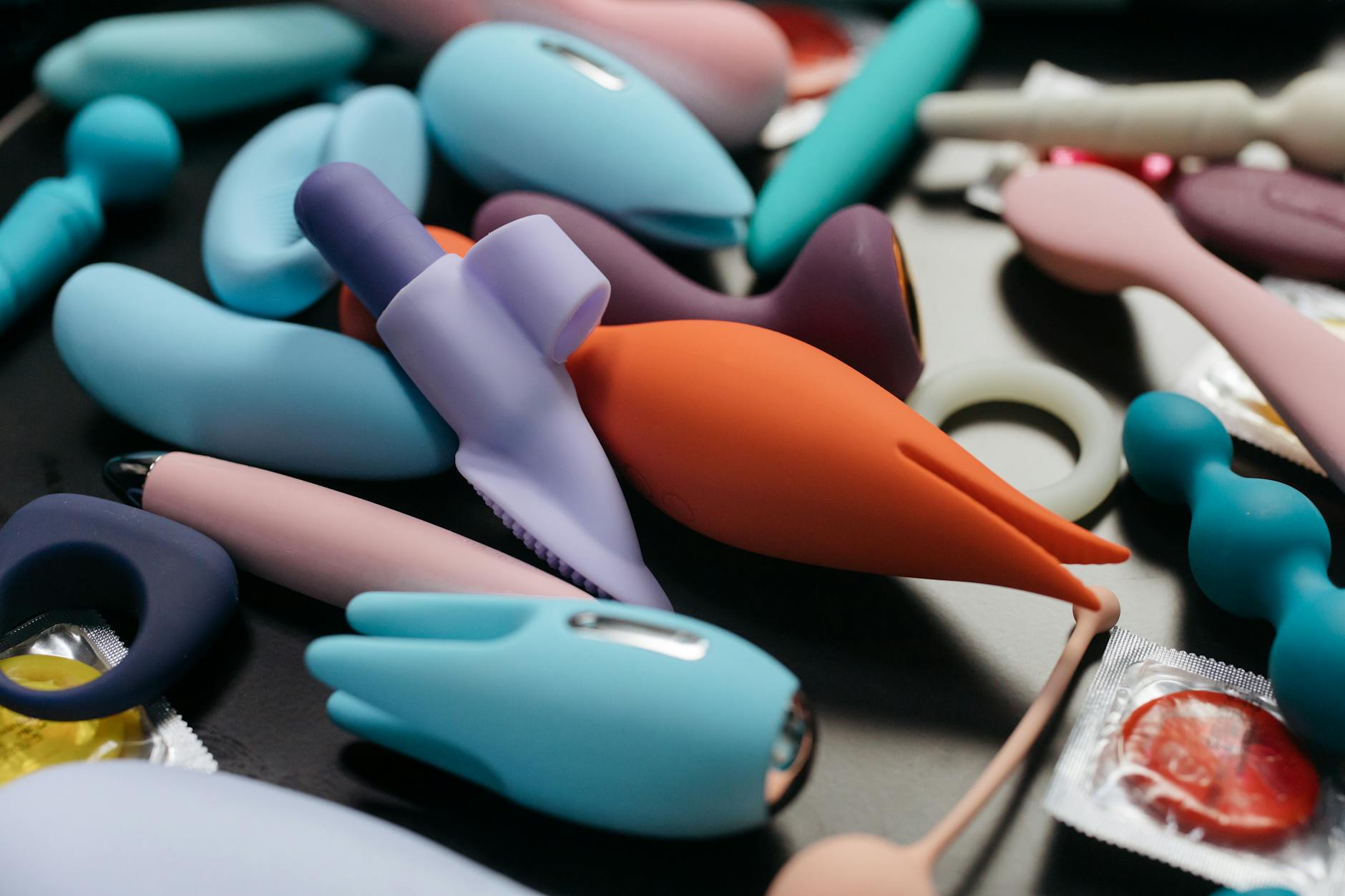
Let's start with what menopause actually does to desire
Menopause doesn't just change your body. It rewires your brain's arousal system at the neurochemical level. Estrogen, which primes your nervous system for sexual response, plummets. Dopamine and serotonin fluctuate in ways that can flatten motivation and mood. Add night sweats, insomnia, and the existential weight of aging in a culture that pretends women stop existing at 50, and you've got a perfect storm for dead libido.
Here's the thing though: a dropped libido isn't the same as a broken capacity for pleasure. One is neurochemical and contextual. The other is a myth.
The neurochemistry that kills arousal
During your reproductive years, estrogen sensitizes your clitoris and vaginal tissue. It thickens the vaginal lining, increases blood flow, and primes the nervous system to notice and respond to touch. When estrogen falls, all of that reverses. The clitoris becomes less engorged. The vagina thins and dries. Arousal takes longer to trigger.
But here's where most conversations about menopause and sex go wrong: they stop there. They treat these changes as an ending instead of a transition.
The clitoral nerves don't disappear. The capacity for orgasm doesn't vanish. The brain's pleasure centers are still firing. What's missing is the biochemical priming that used to happen automatically. So arousal takes longer. It requires more intention. It needs different stimulation.
That's not a loss. That's a recalibration.
Why libido tanks and why it's not about your partner
Most women I work with report that their dropped libido feels personal. They internalize it. They assume they've fallen out of love, or that something is wrong with them sexually. They don't talk about it because the shame compounds the numbness.
But the research is clear: post-menopausal libido is about hormones, sleep, stress, and body image. It's almost never about actual desire for your partner.
When estrogen is low, your brain prioritizes survival. Cortisol spikes with insomnia. The nervous system stays stuck in mild fight-or-flight. In that state, sexual arousal feels like a luxury you can't afford. Your brain is keeping you alive, not interested in pleasure.
Second, the physical changes themselves create anticipatory anxiety. If you know that sex might hurt, or that you won't feel much, or that it'll take an hour of friction for minimal payoff, you stop wanting to start. That's rational self-protection, not lack of desire.
Third, the cultural invisibility of post-menopausal sexuality is real and it's crushing. You're supposed to stop being sexual. Your partner might be subtly pulling back. You're aging in a world that's already moved on from you. Desire dies in that environment.
How a lemon clitoral vibrator changes the game
Here's why I recommend clitoral vibrators specifically when libido drops after menopause: they work with your physiology instead of fighting it.
Trad penetrative sex, which many couples default to, requires arousal to build gradually through friction and psychological stimulation. When your nervous system is depleted and your tissues are thinner, that can take forever or hurt. A lemon vibrator like the Lem short-circuits that entire dynamic.
Air-suction vibrators (also called clitoral suckers) stimulate the clitoris through gentle vacuum and pulsing. They don't require the same tissue thickness as friction-based toys. They work faster. They require less mental effort. And they're frankly more effective at triggering orgasm in post-menopausal bodies because they're targeting nerve density, not friction.
You're not forcing arousal to happen the old way. You're choosing a tool that meets your body where it actually is right now.
Starting with the Lem when nothing feels like it used to
If you haven't used a vibrator before, or if you have but it's been years, the transition to a lemon vibrator takes a bit of intention. Here's how to make it work:
First, separate pleasure exploration from partner sex. Menopause is not the time to figure out a new tool during partnered sex. Start solo. Remove the pressure of performance. Solo exploration with a lemon clitoral vibrator is how you reconnect with your own capacity for sensation. Once you know how your body responds, you can bring it into partnered dynamics if you want to.
Second, invest in the right lube. Water-based lubricant isn't a sign of dysfunction. It's a tool. Use it generously. It changes everything. The suction mechanism of a lem vibrator works better with a light layer of moisture, and the sensation is warmer and easier on thinner post-menopausal tissue.
Third, start low. The Lem has multiple intensity levels. Start at the gentlest setting. Your tissues have been through changes. Your nervous system is depleted. Going hard and fast isn't the flex here. Slow, sustained stimulation at lower intensities often triggers better orgasms in post-menopausal bodies than high-speed friction ever did.
Fourth, patience is the setting. Arousal takes longer now. Budget 20-30 minutes. Not because something is wrong, but because your nervous system needs time to switch gears from stress-mode to pleasure-mode. The preamble matters. Music, touch, fantasy, whatever helps you drop into your body. The vibrator is the tool, not the whole experience.
What changes in the bedroom after you reopen that door
When you reconnect with your own pleasure using a lemon vibrator, something subtle shifts in your relationship. You stop waiting for desire to happen to you. You start choosing it. That distinction matters.
Many women tell me that solo exploration with a clitoral vibrator gave them permission to ask their partners for things they'd never asked for before. Not because the vibrator is better than their partner (it's not), but because knowing what you actually enjoy removes the performance pressure. You're not faking it anymore. You're not trying to fit your body into the shape it used to have.
You can then bring the lemon vibrator into partnered sex if you want. Some couples find that combining manual stimulation or intercourse with the vibrator creates new pleasure for both of them. Some women use it solo and keep that as their own practice. Either way, you're no longer grieving the sex you used to have. You're building the sex you actually want now.
When to see a doctor about the drop
If libido has completely flatlined and exploring solo isn't rekindling anything, a doctor visit is worth it. Sometimes dropped libido signals something treatable: low thyroid function, vitamin deficiency, depression that's crept in unnoticed, or a medication side effect.
Topical estrogen creams can help if the physical changes are causing pain or numbness. Testosterone therapy is worth discussing with a menopause-informed doctor if desire has vanished entirely. Neither is for everyone, but both are options.
Also, if your partner's libido has stayed high while yours tanked, that mismatch can erode intimacy fast. Couples therapy, specifically with a therapist who understands menopause, can help you renegotiate what sex and intimacy look like now. How to Use a Lemon Vibrator With Your Partner When Low Desire Follows Conflict covers some of this directly.
The emotional piece that no one talks about
Menopause is a grief. Your body is changing. Your fertility is ending. Your culture is telling you that you're becoming invisible. That is a real loss, and it deserves to be grieved.
But grief and pleasure aren't mutually exclusive. Reconnecting with your sexuality after menopause isn't about going backward to who you were before. It's about moving forward into who you're becoming.
Some of the most satisfying sexual experiences I've heard from post-menopausal women have come after they stopped expecting their bodies to perform the old way and started actually exploring what feels good now. A lemon vibrator isn't a consolation prize. It's a tool for that exploration.
FAQ: What people actually ask about menopause and vibrators
Does menopause make orgasms impossible?
No. The nerve pathways for orgasm don't disappear. What changes is how quickly arousal builds and how much direct stimulation you need. Many women find that orgasms feel different post-menopause (sometimes more intense, sometimes more diffuse), but they're absolutely still possible. A clitoral vibrator is often the most direct route.
Will using a vibrator make me dependent on it for pleasure?
No. Your body doesn't get "addicted" to vibrators the way it might become tolerant to certain medications. What happens is you learn what your body actually enjoys. That knowledge then transfers to other contexts: partnered sex, manual stimulation, fantasy. Using a lemon vibrator solo actually helps many women communicate better with partners about what they want.
Is it normal to feel numb even with a vibrator?
Yes, sometimes. If you're on certain antidepressants or blood pressure medications, or if you're severely sleep-deprived, or if stress is sky-high, numbness can persist even with external stimulation. That's not a sign the vibrator is wrong. It's a sign your nervous system needs more support. Sleep, stress management, and sometimes medication adjustment matter more than the tool in those moments.
Should I use the lemon vibrator alone or with my partner?
Start alone. Full stop. You need to know how your own body responds without the pressure of someone else's experience or timeline. Once you've explored solo and felt some reconnection, you can bring it into partnered sex if you want. Some couples incorporate it, some don't. Both are fine.
How often should I use a lemon vibrator after menopause?
As often as feels good. Some women find that regular solo exploration (2-3 times a week) helps keep their nervous system primed for pleasure. Others go weeks between sessions and that works fine. There's no "should" here. Listen to your own desire, which might be quieter now but is still there.
Does menopause libido ever come back on its own?
Sometimes. A few years past menopause, some women report a spontaneous rebound in desire. Stress sometimes lifts. Sleep stabilizes. Acceptance softens. For others, libido stays lower, and that becomes the new normal. The goal isn't to restore what you had. It's to build what works for you now.
You're not past your sexual prime
Here's what I know after decades of working with couples through menopause: the women who reconnect most fully with pleasure are the ones who stop expecting their bodies to work the old way and start experimenting with what actually works now.
A lemon vibrator isn't a band-aid for lost desire. It's an invitation to relearn your own pleasure. And that? That's often deeper and more satisfying than what came before.