
When desire just disappears
Let's be real: a partner's sudden drop in sex drive hits differently than a gradual fade. One month you're having regular sex, the next month it's radio silence. No explanation, no apology, just this weird absence where intimacy used to be. You're wondering if it's you, if they're attracted to someone else, if the relationship is ending. And they might be wondering why you care so much when "we're not even fighting."
Here's what I've seen in couples therapy hundreds of times: a sudden libido crash is almost never about attraction to you. It's usually about stress, medication changes, depression, work anxiety, or just running on fumes. But knowing that intellectually doesn't help when you're touch-starved and confused.
A lemon clitoral vibrator becomes something different in this context. It's not a replacement for your partner's desire. It's a way to keep your own pleasure alive, guilt-free, while they work through whatever's happening on their end.
Why the gap widens when you stop asking
Here's the counterintuitive part: when your partner's desire drops and you stop initiating sex, the physical distance often creates emotional distance too. You stop touching them casually. They notice the withdrawal and assume you're angry (sometimes you are). They pull back more. Six months later you're having different conversations in different rooms.
Using a lemon vibrator or other clitoral vibrators keeps you connected to your own pleasure, which paradoxically makes you less resentful. I've worked with clients who swore their relationships were ending, then realised they were angrier about their own unmet needs than about their partner's low desire. The moment they gave themselves permission to come, the conversation shifted.
This isn't spiritual nonsense. It's neurochemistry. Orgasms release oxytocin, dopamine, and serotonin. You become less reactive when you're not sexually frustrated. Your partner can sense that shift. They feel less guilty and less pressured. The whole dynamic loosens.
Starting the conversation before you reach for the toy
Don't surprise them with a lemon vibrator during a moment of intimacy. That's a conversation starter, not a solution. Instead, pick a neutral time (not bed, not after rejected sex) and say something like: "I've noticed things have been quieter between us. I'm not angry, but I am missing connection. I'm going to make sure I'm taking care of my own pleasure so I'm not carrying resentment. I hope that's okay with you."
That's not asking permission. It's letting them know your boundary. And it opens a door for them to talk about what's actually going on with their desire.
Sometimes the answer is "I'm depressed and I hate my job," or "My medication killed my libido" or "I feel pressure and it makes me shut down." Those are all solvable. But you can't solve them if you're both pretending nothing's happening.
How to actually use a lemon vibrator when desire is mismatched
Three practical approaches:
Solo sessions without guilt
Set a time when your partner knows you're alone. Use your lemon vibrator or lem vibrator with no expectation that they participate. Orgasm, enjoy it, move on. The psychological permission is the hard part. Many people feel like they're cheating or being selfish. You're not. You're staying sane.
Start with 10 to 15 minutes, not an elaborate ritual. You're normalising this, not staging a production. Some partners eventually want to join in once the pressure is off. Some don't. Either is fine.
Parallel pleasure
You're both in bed. They're scrolling their phone or reading. You use your lemon clitoral vibrator. They're present but not required to participate. This is less isolating than solo sessions and it keeps your bodies in the same space, which matters for attachment.
Low-key parallel pleasure is how many mismatched couples survive long enough for the mismatch to resolve naturally, which it often does once stress or medication side effects are handled.
Gradual reintroduction
Once your partner's desire starts to return, a lemon vibrator becomes a bridge tool. You use it during foreplay to get yourself going. They watch, gradually become more engaged, eventually participate without the pressure of "making you come" themselves. This removes performance anxiety from both sides.
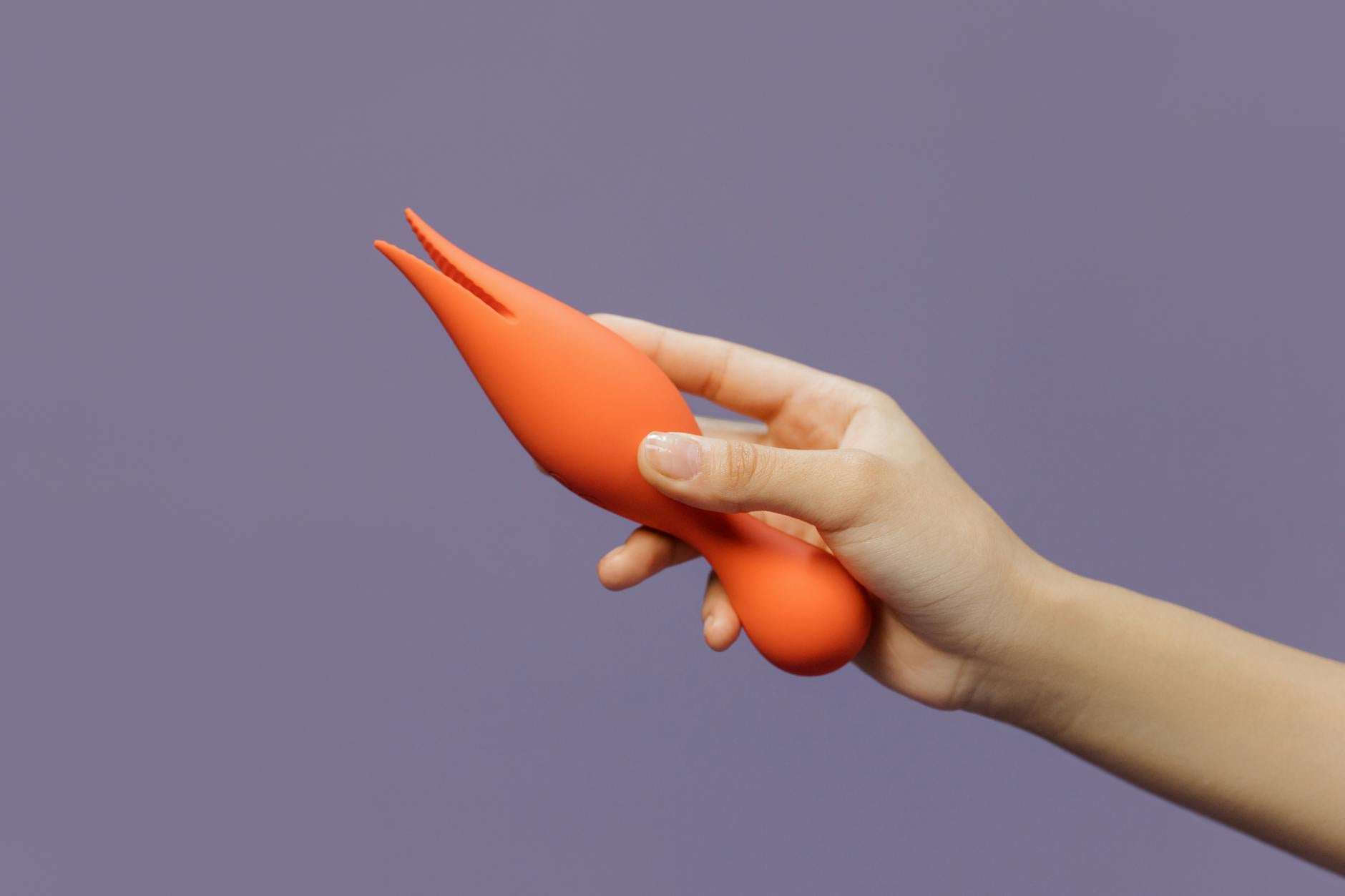
Photo by cottonbro studio on Pexels
The things that actually help them get their desire back
Using a lemon vibrator keeps you sane, but it doesn't fix the underlying issue. That requires them to do some work:
1. Doctor visit. If their desire dropped suddenly, this isn't just "losing the spark." Medication side effects, thyroid problems, low testosterone, depression, and other medical stuff all kill libido. They need a GP assessment.
2. Stress audit. Is work insane? Are they managing anxiety? Are they sleeping? Desire is the first thing to go when someone is running on empty. Sleep and stress management come before sex fixes.
3. Talking to someone. Sometimes a sudden libido crash is depression speaking. Sometimes it's relationship resentment they haven't voiced. A therapist isn't for couples who are broken. It's for people dealing with their own stuff that's showing up as low desire.
4. Scheduling sex. This sounds unsexy. It works. When someone's desire is mysteriously absent, their nervous system is dysregulated. Scheduled sex removes the "spontaneity or nothing" pressure and gives their brain time to anticipate pleasure instead of feeling ambushed.
Why this isn't about replacing your partner
The biggest fear when introducing a clitoral vibrator into a mismatched-desire relationship is: "Will they think I don't want them anymore?" The answer is almost certainly no. What they might think is: "I'm so relieved they're not waiting for me to fix this by myself."
A lemon vibrator isn't a replacement. It's a pressure release valve. It's the thing that keeps you from making their low desire into your crisis. It's how you stay kind to them while staying honest with yourself.
I've seen couples save their relationships by doing exactly this. Not by forcing sex when desire was gone, but by getting comfortable with the discomfort, using the right tools, and staying connected while waiting for things to shift.
When the gap never closes
If you've given it three to six months, your partner has seen a doctor and ruled out medical stuff, they're managing stress better, and their desire still hasn't returned, this is a bigger conversation. Not a crisis conversation, but a real one about whether you can live with this long-term or whether you need something different.
A lemon vibrator can bridge a gap. It can't bridge an incompatibility. But most desire drops aren't incompatibilities. They're temporary misalignments that resolve once the actual problem gets named and addressed.
FAQ: When your partner's drive has vanished
Will using a vibrator make my partner feel like I'm rejecting them?
No, not if you have the conversation first. Rejection is when you withdraw entirely and pretend everything's fine. Honesty is when you say "I need this for me, and it's not about you." There's a massive difference, and most partners respect the second one.
How often should I use my lemon vibrator if my partner's desire is low?
As often as you want. There's no limit. Daily, three times a week, once a month. Your pleasure isn't rationed. Use it whenever it feels good.
Can a lemon clitoral vibrator help bring my partner's desire back?
Directly? Only if they watch you enjoy it and get turned on by that. Indirectly? Absolutely. Your relaxation and pleasure make the relationship less tense, which helps their nervous system settle enough for desire to return. But this isn't the vibrator's job. Their doctor, their therapist, and their stress management are the main players.
What if my partner sees me using a lemon vibrator and gets jealous or upset?
That's important information. If they're uncomfortable with you having solo pleasure, that's something to explore together. Is it about control? Insecurity? Their own hangups about sexuality? A therapist or couples counselor can help untangle it. But you shouldn't have to sacrifice your pleasure to manage their discomfort.
Should I tell my partner I bought a lemon vibrator or keep it private?
If you're living together and share a space, privacy gets tricky. If you can keep it private without lying about it, great. If they find it and ask, be honest. "I needed something for me during a time when things got quiet between us. I'm glad we can talk about it now."
How do I bring my partner back into sex after I've been using a vibrator solo for a while?
Start small. Invite them into the room without pressure to perform. Use your vibrator while they're present. If they want to touch you, great. If they want to just be there, that's fine too. Let desire return gradually instead of ambushing them with "let's fix this now."
The short version
When your partner's desire disappears, it's not about you. Using a lemon vibrator is how you stay true to yourself while they work through whatever's happening on their side. It keeps you from becoming resentful. It keeps the relationship from turning into a negotiation. And it usually, once the underlying issue gets addressed, creates the space for desire to come back naturally.
Your pleasure matters even when theirs is offline. Especially then. A good clitoral vibrator like the Lem is there for exactly this season.