
Let's name the awkwardness first
Time apart rewires your nervous system. Whether it's been three months or three years, your body forgets what it feels like to be touched by this person. Your brain overthinks it. Suddenly you're hyper-aware of how your skin looks, how you smell, whether you're doing the right thing at the right speed. Arousal, which used to be automatic, now feels like it's operating on dial-up. This is completely normal. It's also completely solvable.
The problem with "just relax and it'll come back" is that willpower doesn't rewire nerve pathways. You need a tool that bridges the gap between intellectually wanting intimacy and your body actually cooperating. That's where a lemon clitoral vibrator comes in.
Why reconnecting feels physically different
When you've been apart for a while, several things happen at once. Your pelvic floor tightens from lack of stimulation. Blood flow patterns change. Your brain's expectation of pleasure shifts because, honestly, you've probably spent months or years not thinking about sex at all. Then your partner shows up and suddenly you're supposed to switch that on like it's still muscle memory.
It's not laziness or loss of desire. It's neurobiology. The pathways that connect anticipation to arousal get quieter when they're not used. A lemon vibrator doesn't require that pathway to be loud. It directly stimulates the nerve endings on your clitoris—about 8,000 of them—and creates sensation that your brain recognizes as pleasure without needing arousal to come first.
This matters because it breaks the circular anxiety. You're not waiting for arousal that won't arrive. You're creating physical sensation, which often triggers arousal once your nervous system realizes it's safe.
The awkwardness of partnered sex after time apart
Here's the dynamic I see in my therapy room over and over. One person is ready to jump back in. The other person isn't feeling it yet. This creates shame on both sides. The ready person feels rejected. The hesitant person feels broken. Both of you start avoiding touch entirely because it's safer than risking that mismatch.
Using a lemon sucker together completely reframes this. It's not "are we having sex." It's "let's explore sensation together in a way that doesn't require traditional arousal." You can use it on yourself while your partner watches and touches you elsewhere. You can both hold it. You can incorporate it into foreplay without it feeling like a substitute for connection—it's actually deepening it because you're doing something that feels good rather than something that feels obligatory.
The Lem vibrator, specifically, works beautifully here because the suction pattern mimics clitoral massage rather than buzzing. It feels less clinical and more intimate. It's also designed to be used during partnered touch, which means you're not switching between "partnered mode" and "toy mode." It's seamless.
Starting solo to reset your baseline
Before partnered experiments, your nervous system needs a solo reset. Spend a week or two using a lemon clitoral vibrator alone with zero performance pressure. No partner watching. No goal of orgasm. Just exploration.
Start with the lowest suction setting. You might be surprised how intense even the gentlest setting feels after time away. Spend 10-15 minutes with it once a day, more if you want. Your pelvic floor will start to relax. Your brain will re-establish the "this is safe and pleasurable" file it's been missing. You'll start to remember what arousal feels like.
This solo phase also tells you something important: whether your difficulty reconnecting is about the relationship or about your own nervous system. Often it's both. Solo exploration with a lemon vibrator clarifies which is which. If you feel nothing even alone, that's valuable information for a doctor or therapist. If you feel everything alone but nothing with your partner, that's a different conversation—and a more solvable one.
Bringing it into partnered space
Once you've had a week or two of solo exploration, introduce it with your partner in a low-stakes way. Not "tonight we're having sex," but "I want to show you something that feels good."
Lay together. Use the vibrator on yourself while they touch your arms, your neck, your thighs. Let them watch. Watching is genuinely intimate if you drop the shame around it. Then hand it to them and let them use it on you while you guide the intensity and speed. This gives you control. It also shows them what you like without any guessing.
After a few sessions of this, partnered penetration or oral often becomes possible again because you've rebuilt some arousal momentum. But even if it doesn't, you've still rebuilt physical intimacy. That matters as much as any specific sex act.
The timeline is not linear
Some people reconnect in a week. Some take months. There's no right speed. What matters is that you're moving toward it rather than away from it. If you're using a lemon vibrator consistently and noticing any uptick in sensation or interest, that's movement. Celebrate it.
Where I see couples get stuck is when they decide that slow progress means something is broken. "If we really loved each other, we'd want each other immediately." That's actually not true. Desire is partly brain chemistry and partly nervous system state. You can love someone completely and still need a runway to reconnect physically.
Why the Lem specifically works for this
There are dozens of clitoral vibrators. The Lem is built for people who need their sensation to feel grounded and real rather than buzzy and abstract. The suction technology means you can use it with or without lube, you can use it during partnered touch, and the sensation stays consistent—you're not wrestling with vibration intensity that confuses your nervous system further.
For someone reconnecting after time apart, that consistency is huge. Your body is already in a state of relearning. The last thing you need is a tool that feels unpredictable.
When to get professional help
If you've been using a lemon vibrator solo for two weeks and feeling nothing at all, talk to a doctor. Sometimes numbness after time apart points to hormonal shifts, depression, or medication side effects. That's not a relationship problem. That's a health problem.
If you're feeling solo sensation but complete shutting down happens the moment your partner enters the room, consider a few sessions with a sex therapist or relationship counselor. This often indicates anxiety that's specific to vulnerability with this person, and that's absolutely fixable with the right support.
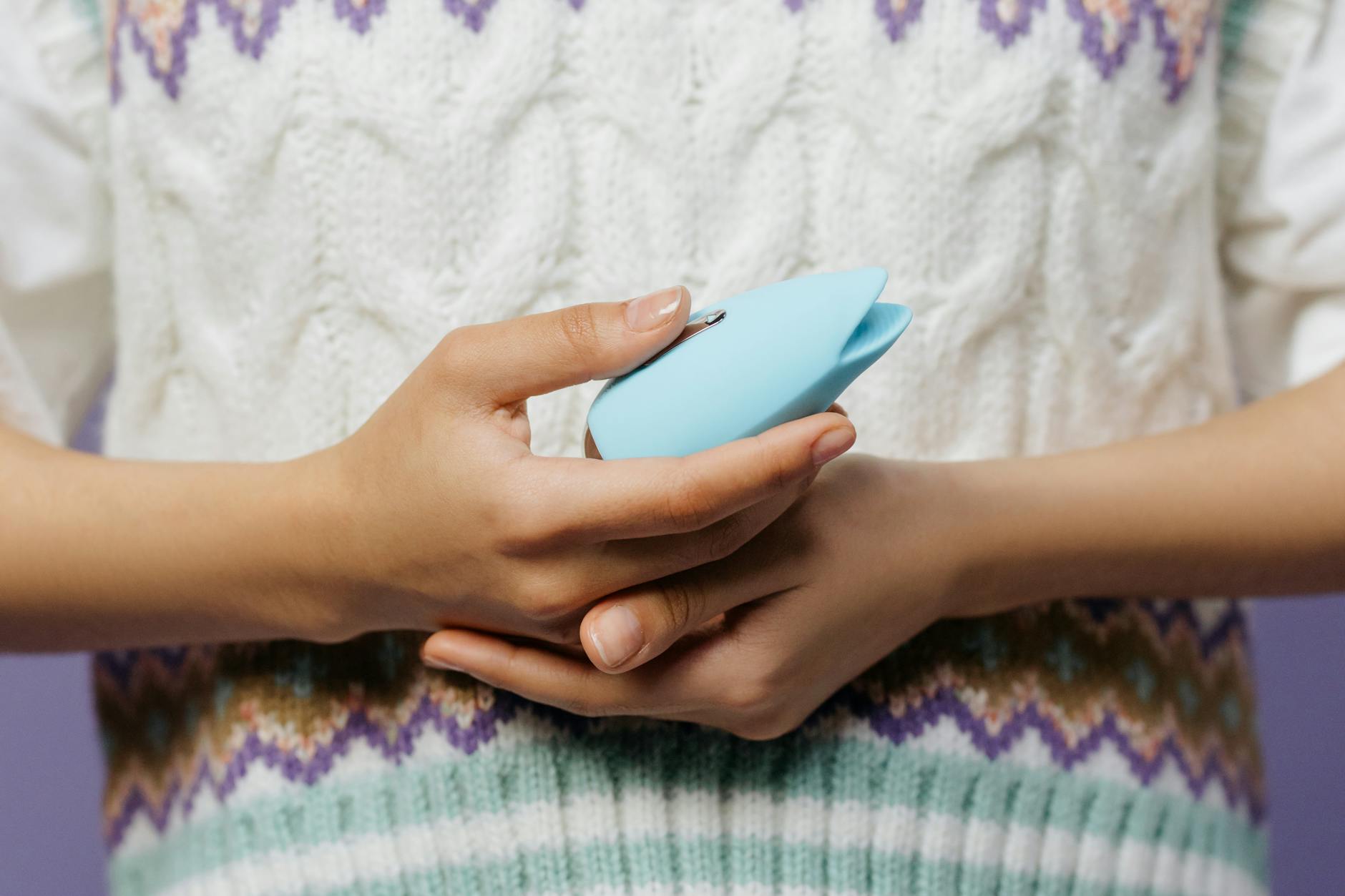
Photo by cottonbro studio on Pexels
The bigger picture: reconnection is a skill
Reconnecting physically after time apart isn't something that should feel shameful or require willpower. It's a skill you're relearning. A lemon clitoral vibrator is a tool that makes that relearning faster and gentler. You're not "fixing" a broken desire. You're reminding your nervous system that pleasure is still available to you.
The couples I work with who move through this phase most successfully are the ones who approach it with curiosity rather than pressure. "Let's see what works now" instead of "we need to get back to how it was." Time apart changes you. You might actually like what reconnection looks like now better than before.
Frequently asked questions
How long does it usually take to reconnect physically after time apart?
It depends on how long you were apart and what caused the separation. Most couples see meaningful shifts in arousal and comfort within 2-4 weeks of consistent, pressure-free touch. That might be partnered massage, solo exploration with a vibrator, or just being naked together without expectations. The key is consistency, not intensity. Even 10 minutes a day of intentional reconnection moves the needle more than one "big attempt" that feels pressured.
Can using a lemon vibrator make my partner feel like I don't want them?
Not if you frame it correctly. The conversation matters. "I want to feel more aroused with you, and I've found this helps me get there" is very different from "I need this because you don't turn me on." One is collaborative. One is blaming. A vibrator is a tool for connection, not a replacement for it. In fact, couples who use vibrators together report higher satisfaction and intimacy overall.
What if my partner and I are on completely different timelines for reconnecting?
That's the hardest scenario, and it requires honest conversation. The person ready to reconnect often interprets delay as rejection. The person who's hesitant often feels pressured. Using a lemon vibrator together can actually soften this dynamic because it takes the weight off traditional penetration or performance. You can be intimate in a way that doesn't require both people to be equally aroused. But underneath that tool use, you need to talk about what's actually happening. Is it anxiety? Resentment? Burnout? Fear? Each one needs different support.
Is it normal to need a vibrator after being apart?
Completely normal. Your body's arousal response is partly learned—it's based on repetition and expectation. When that repetition breaks, arousal takes time to rebuild. Using a lemon vibrator accelerates that rebuild. You're not broken. You're just priming a system that's been dormant. Many people who use vibrators to reconnect stop needing them as much once their nervous system remembers the pathway.
My partner has ED and we haven't had sex in years. Can a lemon vibrator help us reconnect?
Absolutely. Erectile dysfunction is common and treatable, but in the meantime, your own pleasure doesn't have to be on hold. A lemon clitoral vibrator lets you experience arousal and orgasm with or without penetration. This actually often reduces pressure on your partner, which can help ED improve. Many couples find that taking penetration off the table entirely and exploring other forms of touch—including vibrator use—actually rebuilds intimacy faster than trying and failing at traditional sex.
How do I introduce the conversation about using a vibrator to reconnect?
Keep it simple and curious. "I read about using vibrators to help people reconnect after time apart. Would you want to try that together?" Most people appreciate the directness. If your partner seems hesitant, ask what they're worried about specifically. Sometimes it's not about the vibrator. It's about shame, or feeling like they've failed, or fear of being touched. The vibrator conversation is actually a gateway to deeper intimacy conversations that need to happen anyway.
The path forward
Time apart doesn't erase connection. It pauses it. Your job now is to gently reactivate your nervous system's capacity for pleasure and touch. A lemon vibrator makes that gentler. It gives you agency—you control the sensation, the speed, the intensity. It removes the performance pressure. It bridges the gap between your brain's desire and your body's arousal until those two systems sync back up.
Reconnection isn't supposed to feel like you're forcing something broken. It's supposed to feel like remembering something beautiful. A clitoral vibrator helps you get there.