Let's be real about what trauma does to pleasure
Trauma doesn't kill your capacity for pleasure. It disconnects the wires between your body and your brain. You might feel touch without feeling touched. You might climax without actually feeling the orgasm. Or you might shut down entirely, unable to access arousal even when you want to. All of these are normal nervous system responses to what you've survived.
Here's what I see in my therapy practice: people who've experienced trauma often describe their bodies as foreign. Like they're watching themselves from outside. The technical term is dissociation, but the lived experience is loneliness. Your body is right there, but you're not in it.
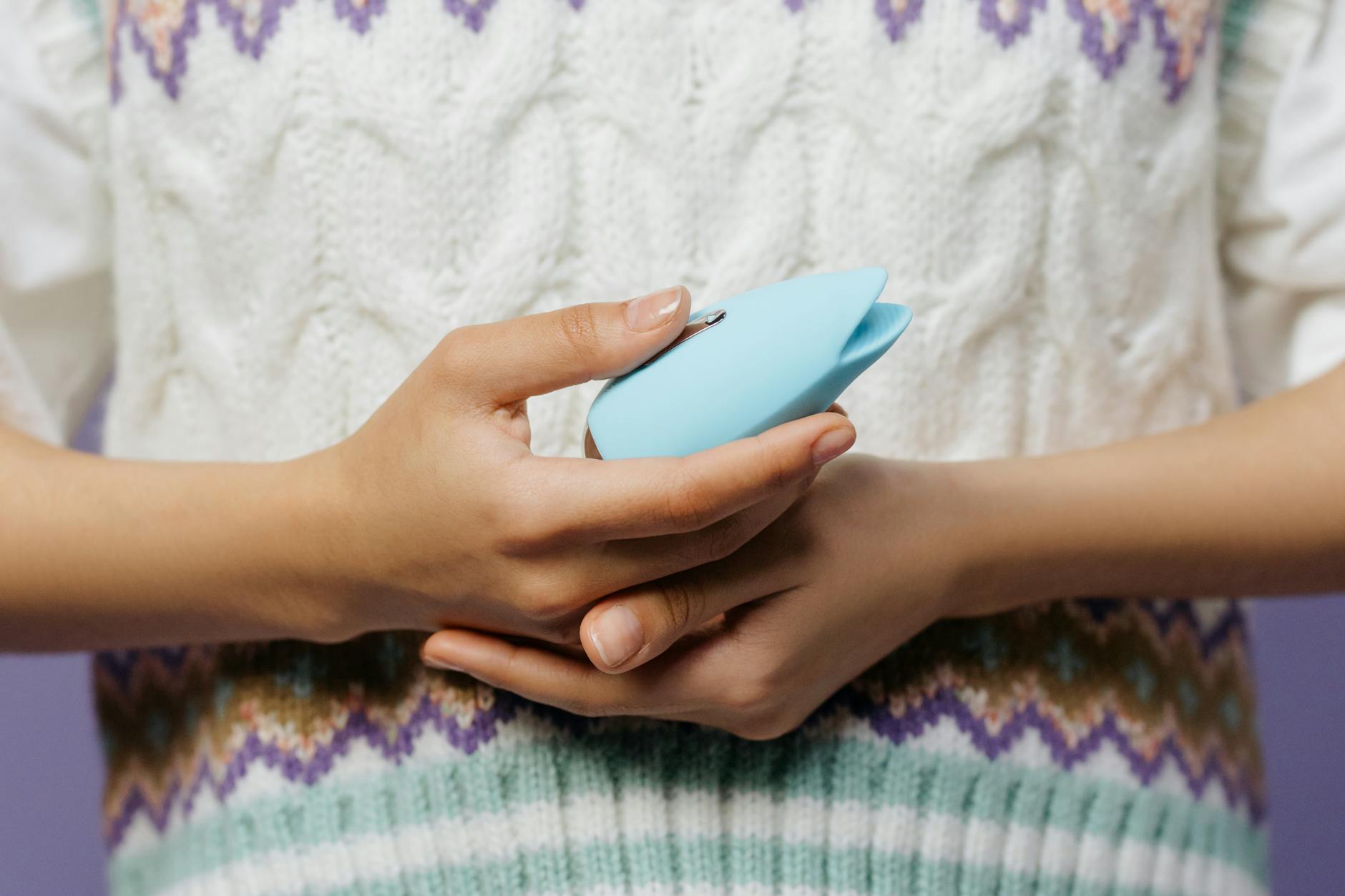
The good news? Your nervous system can be retrained. It takes patience, often professional support, and tools that help you stay grounded. A lemon clitoral vibrator like the Lem can be one of those tools, but only if you use it the right way.
Why dissociation happens during pleasure
When you've survived trauma, your brain learned to escape your body as a survival mechanism. It worked. It kept you safe. But now your nervous system is still running that old program even when danger isn't present. During sex or self-pleasure, arousal can trigger the same sensations that were present during the trauma, which sends your system into protective mode. Your mind checks out.
This is not a character flaw. This is not permanent. This is just your nervous system doing its job, albeit too aggressively.
The path back to pleasure isn't about forcing sensation or pushing through discomfort. It's about slowly teaching your nervous system that pleasure is safe. That your body is safe. That you can be present inside your body without threat.
Starting with your own touch, not a toy
Before you introduce a lemon vibrator or any other device, you need to rebuild basic body awareness. I recommend what trauma-informed therapists call pendulation. It's simple.
Find a comfortable position, clothed or partially clothed. Pick a body part that feels more neutral to you. For many people, that's the inside of your forearm or your collarbone. Something that doesn't carry as much charge.
Touch it slowly. Notice the temperature. The texture. The pressure. Don't try to feel anything special. Just notice. When your mind wanders (it will), gently bring it back. This trains your nervous system to notice sensation without judgment.
Do this for 2-3 minutes, several times a week, for at least 2-3 weeks before you even think about adding a toy. This foundation matters. You're rewiring the connection between sensation and presence.
When you're ready for a clitoral vibrator
Once you can stay present with touch on neutral areas for several minutes, you might be ready to explore more sensitive zones. But the tool matters here. A lemon sucker like the Lem uses air-pulse technology instead of traditional vibration. That distinction is important for trauma survivors.
Why? Because suction stimulation creates a gentler, more rhythmic sensation. There's no sharp buzzing that can pull you out of your body. The rhythm is almost meditative. You can feel it clearly without it being jarring. For people rebuilding trust in their body, that's significant.
Start with the Lem on its lowest setting. You're not trying to reach orgasm. You're not trying to prove anything. You're simply introducing your nervous system to the idea that touch can be pleasurable without being threatening.
Bring your breath into this. If you feel yourself spacing out, pause. Lower the intensity. Come back to your breath. In through your nose, out through your mouth. This simple act keeps you anchored in the present moment.
The role of safety and consent, even alone
Here's something most people miss: pleasure after trauma requires the same consent and safety signals that any healthy sexual interaction does. Except you're both the giver and the receiver. You need to give yourself permission and also respect your own boundaries.
Before you even touch yourself, set an intention. Not performance language like "I'll have an orgasm." Real language like "I'm going to spend 10 minutes noticing what feels safe in my body." That shift is everything.
If at any point something doesn't feel right, stop. Your body's no is wisdom, not failure. You're not broken. You're just listening.
Many survivors benefit from a simple grounding ritual beforehand. Light a candle. Play a specific song. Create a sensory anchor that signals to your nervous system: this is a safe, boundaried space. You get to control what happens.
Using the lemon vibrator without pressure
Once you're comfortable with the Lem on low settings for 5-10 minutes at a time, you can experiment with slightly higher intensities. But the operative word is "experiment." There's no timeline. There's no outcome you're supposed to reach.
Here's what I recommend: vary where you place the vibrator. You might try it on your external genitals without focusing on your clitoris. You might use it on your inner thighs, your labia, your perineum. The goal is to expand the map of sensation beyond what feels locked or numb.
Many trauma survivors describe having zones that feel "dead." Patience and consistent gentle stimulation can actually reawaken nerve pathways. It's not instant. It can take weeks or months. But the sensation does often return.
If you're working with a partner, communication is non-negotiable. Let them know what you're exploring and why. Tell them what you need: maybe it's them leaving the room. Maybe it's them nearby but not touching. Maybe it's them holding your hand. You get to design the safety.
When pleasure starts returning, what then
For some people, the first signs of pleasure return come as surprise moments. A flutter of sensation you hadn't felt in years. A moment where you're actually present in your body instead of watching from outside. These tiny victories matter tremendously.
When that happens, resist the urge to chase it or force it to happen again immediately. Instead, notice it. Appreciate it. Come back another day and gently explore. You're not trying to recreate intensity. You're slowly rebuilding trust.
If you find that consistent use of a lemon clitoral vibrator like the Lem is helping you feel more present and more sensation, that's genuinely worth celebrating. You're literally rewiring your nervous system's response to pleasure.
At the same time, if a vibrator ever feels triggering, stop using it. This isn't a linear process. Some days will feel easier than others. Some sessions will be more successful. The work is in the consistency and the gentleness, not in hitting a particular mark.
When to bring a therapist into the conversation
If you're working through trauma's effects on pleasure, please also be working with a trauma-informed therapist or sex therapist. A lemon vibrator is a tool, not a treatment. Professional support is the actual treatment.
Specifically, look for therapists trained in somatic experiencing or sensorimotor psychotherapy. These approaches directly address how trauma lives in the body and how to help it move through. Combined with your own exploration, they create real change.
If dissociation feels severe, if you're having flashbacks during pleasure, or if grounding techniques aren't helping, that's when you need additional professional support. There's no shame in that. That's wisdom.
Your pleasure matters. Your healing matters. You don't have to do this alone.
FAQ: Reclaiming pleasure after trauma
Can a clitoral vibrator help if I've experienced sexual trauma?
Yes, but only if you approach it slowly and with self-compassion. A lemon vibrator like the Lem can help you rebuild sensation and trust in your body, but it's a tool that works best alongside professional support. The suction technology is gentler than traditional vibration, which many trauma survivors find less triggering. Start at the lowest setting, focus on grounding and breathing, and stop immediately if anything feels unsafe.
How long does it take to reconnect with pleasure after trauma?
There's no single timeline. For some people, reconnection happens over weeks. For others, it's months or years. What matters is consistency and self-compassion, not speed. You're retraining your nervous system, and that takes repetition and patience. If you're not seeing progress after 2-3 months of regular, gentle exploration, talk to a trauma-informed therapist about what might be blocking you.
What's the difference between dissociation and low sensation?
Dissociation is feeling disconnected from your body, like you're watching yourself from outside. Low sensation is feeling touch but it being more muted or numb. Both are common after trauma, and both can improve with grounding work and gentle stimulation. If you're dissociating, start with the pendulation exercise on neutral body parts before introducing any vibrator. If you're experiencing numbness, consistent low-intensity vibrator use can help rewaken nerve pathways.
Is it normal to feel nothing during self-pleasure after trauma?
Completely normal. Your body learned to shut down sensation as protection. That's not a failure of your body. That's evidence of how hard it worked to keep you safe. Reconnecting with sensation is a gradual process that starts with presence, not intensity. Focus first on staying in your body and noticing whatever you can feel, even if it's just pressure or temperature.
Should I tell my partner I'm using a lemon vibrator to heal from trauma?
That depends on your relationship and comfort level. If you have a partner you trust, sharing what you're working on can actually deepen intimacy and help them understand your boundaries and needs. You don't have to share details. Simple language like "I'm doing some personal exploration to reconnect with my body, and I want to do that alone for now" is enough. If you don't have that level of trust with a partner, that itself might be something worth exploring with a therapist.
What if using a vibrator triggers a flashback?
Stop immediately. Remove the vibrator, move to a different location if possible, and use a grounding technique. The 5-4-3-2-1 method works well: name 5 things you see, 4 you can touch, 3 you hear, 2 you smell, 1 you taste. After you feel stable, reflect on what happened. Was it the sensation? The position? The environment? Use that information to adjust next time. And absolutely bring this up with your therapist. Flashbacks are data, not failure.
Healing is a practice, not a destination
Reclaiming pleasure after trauma isn't about forcing yourself back to where you were before. It's about slowly, gently discovering what pleasure feels like now. Your body has changed. Your nervous system has changed. And that's actually okay. You get to redefine what pleasure means to you.
Tools like a lemon clitoral vibrator can support that process. Grounding techniques, professional help, self-compassion, and time do the actual work. Your body knows how to feel pleasure. It's just learning that pleasure can be safe again.
If you're navigating this terrain and need additional support, our team is here. Reach out to us to talk through what might work best for your journey.