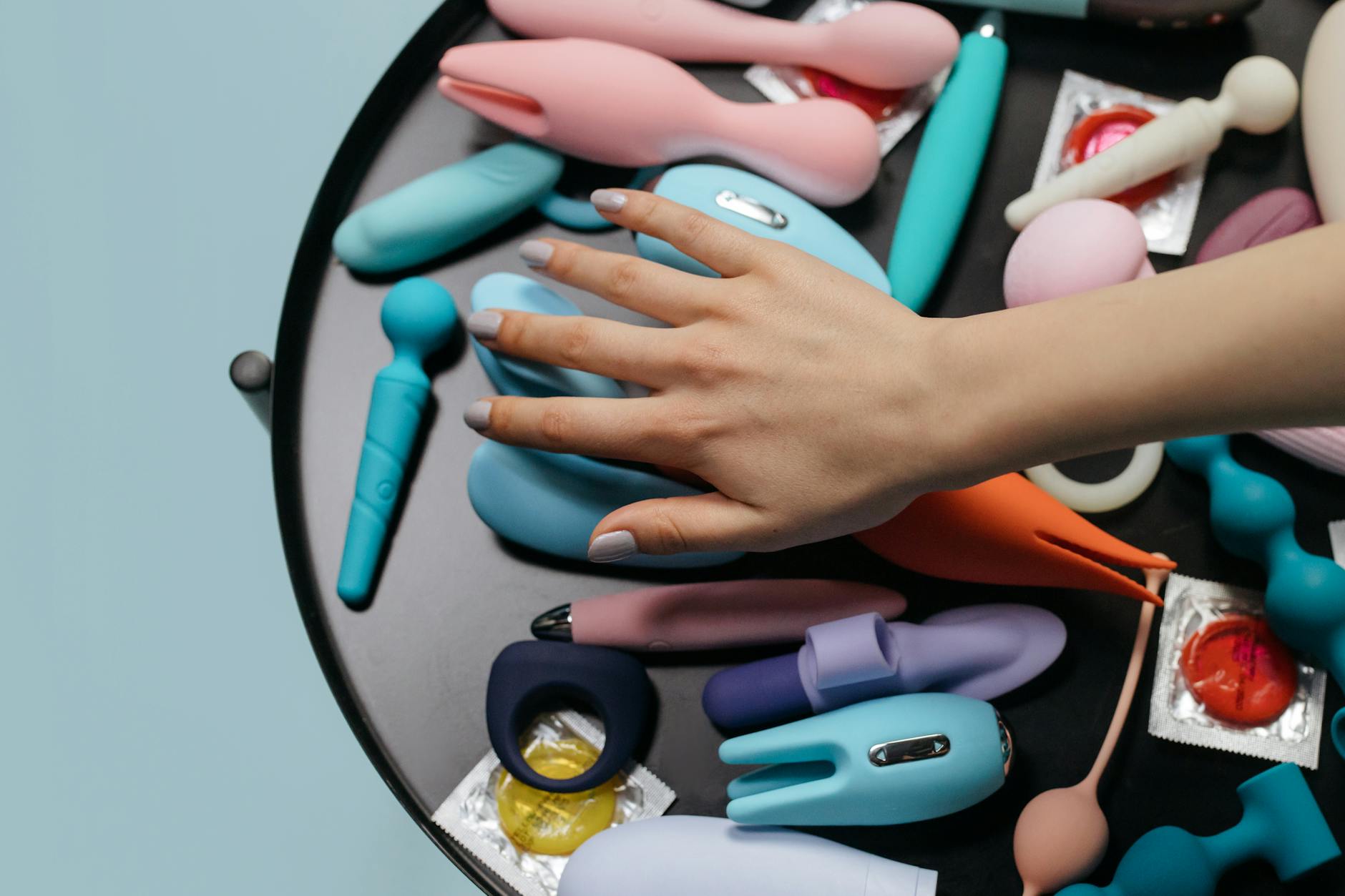
Let's name the thing nobody talks about at the pharmacy
You're on an SSRI because it works. Your mood stabilized. Anxiety stopped hijacking your day. The trade-off nobody warns you about is brutal: desire evaporates, orgasms become impossible or take 45 minutes of effort, and your body feels like it's operating behind a pane of glass.
Here's what matters: this is not your baseline. This is a side effect, and it's fixable without switching medications that actually work for you.
I've worked with dozens of clients navigating this exact bind, and the most effective solution I've seen isn't a second medication or a different drug class. It's understanding how selective serotonin reuptake inhibitors specifically block pleasure, then using tools designed for exactly that problem.
Enter the lemon vibrator and clitoral suction toys.
Why SSRIs flatten pleasure (the actual neuroscience)
SSRIs don't just manage serotonin. They also affect dopamine signaling in the pleasure and reward centers of your brain, and they increase serotonin to your genitals, which paradoxically reduces sensation and delays orgasm. The effect is systemic: you feel less, respond slower, and need significantly more stimulation to cross the orgasm threshold.
Meanwhile, your clitoris hasn't changed. The nerve endings are intact. The neural pathways for pleasure still exist. What's missing is the electrical cascade that connects stimulus to satisfaction.
This is where most vibrators fail you. A standard vibrator just adds vibration to a system that's already struggling with signal strength. You need something that works differently, more intensely, in a way that bypasses the dulled sensation and creates a novel type of stimulation your body can actually register.
That's lemon vibrators and clitoral suction technology.
How suction actually cuts through SSRI numbness
A lemon vibrator like the Lem uses pulse and suction rather than pure vibration. Here's why that matters when you're on antidepressants.
Vibration is distributed stimulation. It spreads sensation across tissue. If your sensitivity is already reduced by 40 or 50 percent (which is common on SSRIs), distributed vibration gets lost in the noise.
Suction is focused, concentrated stimulation that creates a pulling sensation the clitoris can feel intensely even when overall sensation is dampened. It's not vibrating around the nerve endings. It's creating a difference in pressure and rhythm that registers as powerful regardless of how numbed your system feels.
I've had clients report that suction toys are the only thing that worked when they were on SSRIs. Not because they're stronger, but because they work on a completely different principle.
Why pattern and variability matter more than intensity
One critical mistake: cranking a lemon vibrator to maximum power thinking that will punch through the numbness. It won't. What actually works is pattern variation.
When your nervous system is dampened, repetitive stimulation becomes background noise. Your brain stops registering it. But pattern shifts and variability keep your nervous system engaged.
Use this sequence: start on a lower pattern (1 or 2), run it for 20 to 30 seconds, then shift to a completely different pattern. Not incrementally stronger. Different. Pulsing instead of steady. Waves instead of beats. This keeps your nervous system attentive and prevents habituation.
Most people on SSRIs need 15 to 25 minutes of this variable stimulation. That's normal. Plan for it.
Lubrication actually matters now
SSRIs don't just affect sensation. They reduce natural lubrication in many people. Your clitoris might feel numb and your tissues might be drier simultaneously, which is a cruel combination.
This is where technique changes everything. Water-based lubricant isn't optional. It's essential. Use generous amounts.
Lubricant serves two purposes when you're on antidepressants. First, it reduces friction, which means the lemon vibrator's suction can engage tissue more effectively. Second, it creates a seal that makes suction work better, which amplifies the sensation you're able to feel.
If you're using a Hello Nancy lemon clitoral vibrator, apply lube directly to the cup opening and the entire head of the toy, and to your body. Don't be shy. You need more than you think.
Timing matters more than you'd expect
SSRI sexual side effects vary depending on when you take your medication. Some people take SSRIs in the morning and have better sensation at night. Others notice the effect is constant.
If your pharmacy let you choose, experiment. Some of my clients asked their prescribers about taking their SSRI at night instead of morning, which shifted the window of peak sexual side effects away from when they wanted to be intimate.
This isn't about stopping your medication. It's about timing your pleasure practice around your body's pharmacokinetics.
Also worth knowing: the sexual side effects of SSRIs sometimes improve after 6 to 8 weeks on the same dose as your system adjusts. If you're newly on an SSRI, give yourself that timeline before you panic. It's not guaranteed, but improvement does happen.
When to talk to your doctor (and what to ask)
If the sexual side effects are severe enough to affect your relationship or quality of life, you have real options. This isn't something you have to tolerate in silence.
Schedule a conversation with your prescriber. Be specific: "I'm experiencing significantly reduced sensation and it takes me much longer to orgasm." This is not a confession. This is a medical symptom.
They might suggest one of these approaches: adding a second medication that counteracts sexual side effects (like bupropion or buspirone), taking a "drug holiday" (skipping a dose on days you plan to be intimate, if your medication is safe for that), or switching to an SSRI with lower sexual side effect rates (sertraline and paroxetine tend to have higher rates; fluoxetine and citalopram lower rates).
None of these are guaranteed to work perfectly. But they're legitimate medical options, and your doctor should be part of this conversation.
In the meantime, lemon vibrators and clitoral suction toys are genuinely effective tools for reclaiming pleasure while staying on medication that's keeping you well.
The patience piece (and why it matters)
Here's what I tell clients on SSRIs: you're retraining your nervous system to recognize pleasure signals. This takes longer than it did before medication. That's not a failure. That's biology.
Most people need to go slower, use more lube, try different patterns, and plan 20 to 40 minutes for solo pleasure. If that feels like a lot, remember what you're getting in return: medication that makes your life livable and a body that can still experience intense orgasm when you give it the right tool and the right attention.
You're not broken. You're on a drug that's working for your brain. Your body just needs a different approach.
FAQ: Lemon vibrators, SSRIs, and getting sensation back
How long after starting an SSRI do sexual side effects show up?
Typically within the first 1 to 2 weeks as the drug reaches steady state. Some people notice them immediately. It depends on the specific SSRI, your dose, and your individual metabolism. If you haven't experienced sexual side effects after 4 weeks on a stable dose, you probably won't.
Can you use a lemon vibrator if you're also taking bupropion for sexual side effects?
Absolutely. Bupropion is often added specifically to counteract SSRI sexual side effects, and it works well in combination with external stimulation tools. In fact, the combination of bupropion plus a clitoral vibrator like the Lem tends to work better than either alone.
Do I need a different lemon vibrator if I'm on antidepressants?
No. A standard lemon clitoral vibrator works the same way whether you're on an SSRI or not. The difference is in how you use it: longer warm-up, more lube, pattern variation, and patience. The toy itself doesn't need to change.
If I skip a dose of my SSRI for a day to have better sex, is that safe?
Not without talking to your doctor first. Skipping doses of SSRIs can trigger withdrawal symptoms, rebound anxiety, or loss of therapeutic effect. Some SSRIs are safer for occasional skipping than others (fluoxetine is longer-acting; paroxetine is not). Only do this with explicit medical guidance.
What if my orgasms are still impossible after 20 minutes with a lemon vibrator?
Talk to your prescriber. This might mean your SSRI dose is too high, you need an additional medication, or you're a candidate for a different antidepressant class. Anorgasmia (inability to orgasm) is a real side effect that deserves real intervention, not acceptance.
Does the Lem work better than other clitoral vibrators for SSRI sexual side effects?
Lemon suction vibrators like the Lem tend to work better than traditional vibrators specifically because suction creates a different type of stimulation that penetrates numbness more effectively. But you won't know until you try. Every body responds differently, even on the same medication.
The bottom line
SSRIs save lives. They also flatten pleasure. Both things are true. You don't have to choose between mental health and sexual function. You need the right information, the right tool, and honest communication with your doctor about what's actually happening in your body.
A lemon vibrator and suction toy won't replace medication management. But combined with lubrication, pattern variation, and patience, they can help you experience orgasm even when your nervous system is under pharmaceutical dampening.
Your pleasure isn't collateral damage to your mental health. It's worth the conversation, the experiment, and the time.