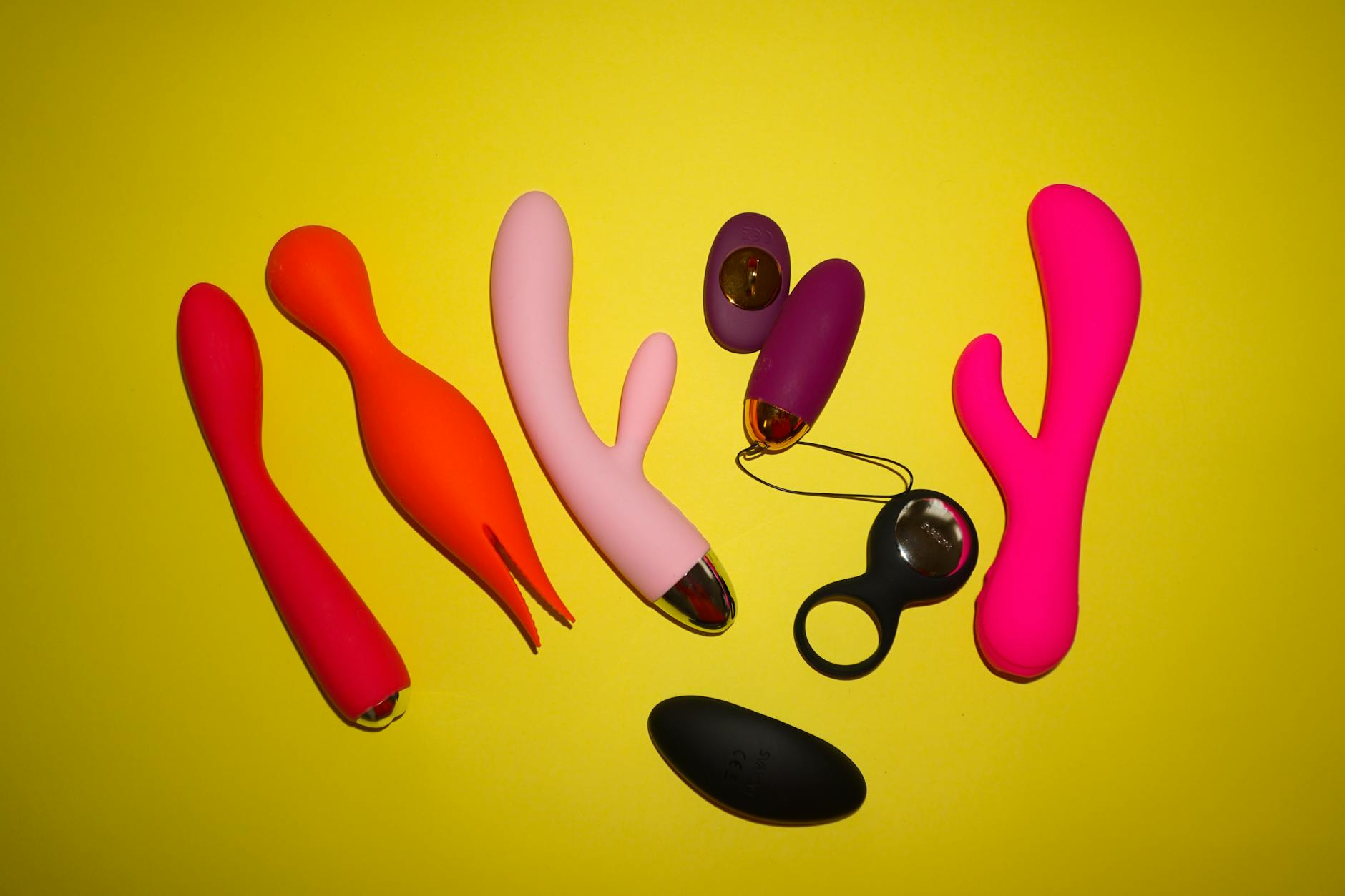
Let's talk about what happens when you pause
It's not unusual. You've had sex regularly for years, then life folded in on itself. A breakup. Illness. Caregiving. Burnout. Or sometimes there's no dramatic reason at all, just a slow fade where pleasure kept getting pushed to the bottom of an impossible list. Then one day you realize it's been six months. A year. Three years.
When you want to start again, something feels off. Your body might feel unfamiliar. What used to work might not land the same way. And the mental piece is real too: shame, self-consciousness, uncertainty about whether you even remember how this goes. Here's what I want you to know: that's completely normal, and a lemon clitoral vibrator is often the gentlest, smartest re-entry point.
Why a lemon vibrator works so well for restarting
The suction-based design of a lemon clitoral vibrator (like Hello Nancy's Lem) works differently than traditional vibrators, which matters when you're easing back in. Instead of direct, grinding stimulation, it creates a gentle seal and rhythmic pulse. This feels less intense while still delivering consistent sensation.
That matters because after a gap, your body's sensitivity is heightened. Not in a good-way sense necessarily, but in a "everything feels a bit too much" sense. A lemon vibrator's gentler approach means you can build sensation gradually instead of jumping straight to overwhelming. Plus, suction-based toys require minimal pressure from your hand, so if you're nervous or your confidence is wobbly, you're not white-knuckling anything.
Another reason lemon vibrators work: they're compact and discreet. After a break, a lot of people feel self-conscious. A smaller device like the Lem lives in a drawer without taking up space or drawing attention, which matters for mental ease.
The first solo session: what to expect
Set aside time when you won't be interrupted. Not a quickie between chores. An actual 45 minutes where your phone is on silent and you're not listening for anyone else. You might not need all of it, but the permission to take time matters psychologically.
Start without the toy. Spend 10-15 minutes on you. Touch your body the way you used to, or discover new ways if the old patterns feel stale. This isn't foreplay in the traditional sense. This is remembering what pleasure feels like in your own hands, at your own pace. Some people cry here. Some feel nothing. Both are fine.
When you pick up your lemon vibrator, start at the lowest setting. Not because you're broken, but because your nervous system has been away and will register sensation more intensely. Run it over your inner thighs, your labia, the general neighborhood before settling on your clitoris.
The clit is packed with nerve endings, and after a gap, it will wake up faster than expected. You might feel almost surprised by how quickly sensation builds. That's not a sign something's wrong. That's your body remembering.
Managing the emotional complexity
Here's what doesn't get talked about enough: the head stuff is harder than the body stuff. Your body will respond. But your brain might be running a loop of "I'm being selfish," "I should be doing something productive," "My partner might walk in," or "I don't deserve this."
That voice is lying to you. Write that down if you need to. Your pleasure is not stealing from anyone else. It's not lazy. It's not shameful. If you're in a relationship, your own sexuality is one of the things your partner married. If you're single, your sexuality isn't dependent on another person's presence or approval.
If you're restarting after a relationship ends, there's another layer. The toy might bring up grief. You might feel lonely in your body in a way you didn't expect. That's information, not a reason to stop. Grief and pleasure can coexist. Actually, they usually do in recovery.
Give yourself permission to feel weird about it. Then do it anyway.
What to do if sensation feels muted or too much
If you're using a lemon vibrator and it feels like nothing is happening, the issue is almost never the toy. It's usually one of three things:
You're not actually relaxed. Your pelvic floor is probably held tight without you realizing it. Spend five minutes on your back, breathing slowly, consciously releasing your pelvic floor on each exhale. Tense it on the inhale, release on the exhale. Do that five or six times. Then try again.
You're in your head. Anxiety kills arousal. If you notice your brain spinning, anchor yourself: feel the texture of the sheets, listen to one specific sound, name five things you can see. Ground in the present moment instead of the narrative running in the background.
You need more time. After a break, the body's arousal response takes longer to build. Eighteen minutes instead of eight. This is normal. The Lem is patient. You can be too.
If sensation feels too intense, dial it back. Seriously. The lowest pattern on any lemon vibrator is a legit destination, not a warm-up. Some people never leave pattern two and have amazing orgasms. Intensity isn't the goal. Pleasure is.
The partner conversation (if there is one)
If you're in a relationship and you're restarting solo play, your partner might feel surprised, left out, or threatened. That's on them to work through, but it helps to be explicit about what's happening.
"I'm taking some time to reconnect with my own body" is different from "I'm not interested in you." The second might be true, and that's a separate conversation. But often they're completely unrelated. You're not choosing the toy over your partner. You're choosing to show up as a whole person in the relationship by honoring your own sexuality.
Some couples find that a solo-play checkpoint actually improves partnered sex. You remember what you like. You show your partner in real time. You're not waiting for them to guess. That's valuable data.
If your partner wants to be involved when you restart, cool. But it should be your choice, not theirs. Your body, your timeline, your rules.
When to add partnered play back in
There's no timeline. I've had clients restart solo for six months before bringing a partner back. I've had others do it once and feel ready for partnered intimacy the next day. Both are right.
When you do introduce a partner, the lemon vibrator can be a bridge. Instead of "the toy replaces my partner," it becomes "the toy helps us both understand what I need." Using it together removes the mystery and also removes the pressure on them to be the sole source of your pleasure. That's actually hot, it turns out.
One more thing: don't restart with someone new until you've restarted with yourself. That's not prude logic. That's practical. You need to know what you like before you can communicate it to another person. A lemon clitoral vibrator is a way to give yourself that information.
The long view
After a break, pleasure doesn't come roaring back. It creeps back in. Your second session might feel better than your first, or worse. Your orgasm might arrive easily or take weeks. Your desire might be quiet for a while.
All of that is a process, not a problem. You're not testing yourself. You're reconnecting. That takes patience with your body and with the part of you that's maybe ashamed or scared or just plain rusty.
A lemon vibrator gives you a low-stakes, genuinely pleasurable way to do that. You're not performing. You're not trying to prove anything. You're just meeting yourself where you are right now and seeing what happens next.
People also ask
How long does it usually take to orgasm after a break from sex?
There's no universal timeline, but most people find that their first orgasm after a gap takes longer than usual. Expect 15-30 minutes instead of your pre-break baseline. That's partly physiological (your nervous system needs time to wake up) and partly psychological (anxiety delays arousal). If you're using a lemon vibrator, the gentler stimulation means the build is more gradual, which actually helps some people relax into it rather than forcing it. After a few sessions, your body usually remembers faster.
Can I use a lemon vibrator if I haven't had sex in years?
Yes, absolutely. In fact, many people find that starting with a lemon clitoral vibrator after a long break is easier than jumping into partnered sex. You control the pace, the intensity, and the timeline. There's no performance pressure. If anything, a lemon vibrator is ideal for someone easing back into pleasure after a gap. Just start with the lowest setting and take your time.
What if I feel guilty using a toy after not having sex for a long time?
That guilt is common and it's also not based in reality. Your pleasure isn't selfish. It's not taking anything from your partner or your family or your productivity. In fact, reclaiming your sexuality often makes you a better partner, parent, and professional because you're less resentful and more grounded in your own needs. Using a lemon vibrator is a way of saying "my body matters, my pleasure matters." That's the opposite of selfish.
Should I tell my partner I'm using a lemon vibrator after a break?
That depends on your relationship and your boundaries. If you live together and privacy is limited, probably yes. If it's your private time and your private space, you don't owe anyone a play-by-play. But many couples find that honesty creates more intimacy, not less. Saying "I'm reconnecting with my own pleasure" is vulnerable and it often brings partners closer. The toy becomes a conversation starter, not a secret.
Why does a lemon vibrator feel gentler than other vibrators when I'm restarting?
Because of how it works. Traditional vibrators use direct, rapid vibration on the clitoral surface. Lemon vibrators use suction, which creates a gentle seal and then pulses rhythmically. This feels less aggressive and gives you more control over intensity. You're not fighting friction. You're not dealing with constant buzzing at one spot. You get gentle, consistent sensation that can build gradually. For someone whose body is sensitive or nervous, that difference matters a lot.
What if I don't orgasm the first few times I use a lemon vibrator?
That's completely normal. Orgasm isn't the goal here. Reconnection is. Some people get so caught up in "will I finish" that they bypass the actual pleasure of sensation. Try switching your focus. Instead of working toward an orgasm, just notice what feels good. Temperature, texture, pressure, rhythm. Stay curious instead of goal-oriented. Orgasms usually follow when the pressure lifts.
You're not behind
Pleasure doesn't have an expiration date. Your body isn't rusty beyond repair. You didn't lose your ability to feel good. You just paused it, and now you're restarting. That takes courage and that's worth honoring.
A lemon vibrator makes that restart easier because it's designed for gentleness without compromise. You get consistent pleasure without intensity you didn't ask for. You get control. You get your own timeline.
Start where you are. Use what you have. Be patient with yourself.
If restarting feels emotionally loaded or if you hit blocks that feel bigger than just physical rustiness, that's what therapists are for. Connection work, sexual confidence rebuilding, relationship repair, grief processing. These are all things I work with people on, and they matter just as much as the physical mechanics.
For questions about your own restart journey, reach out.