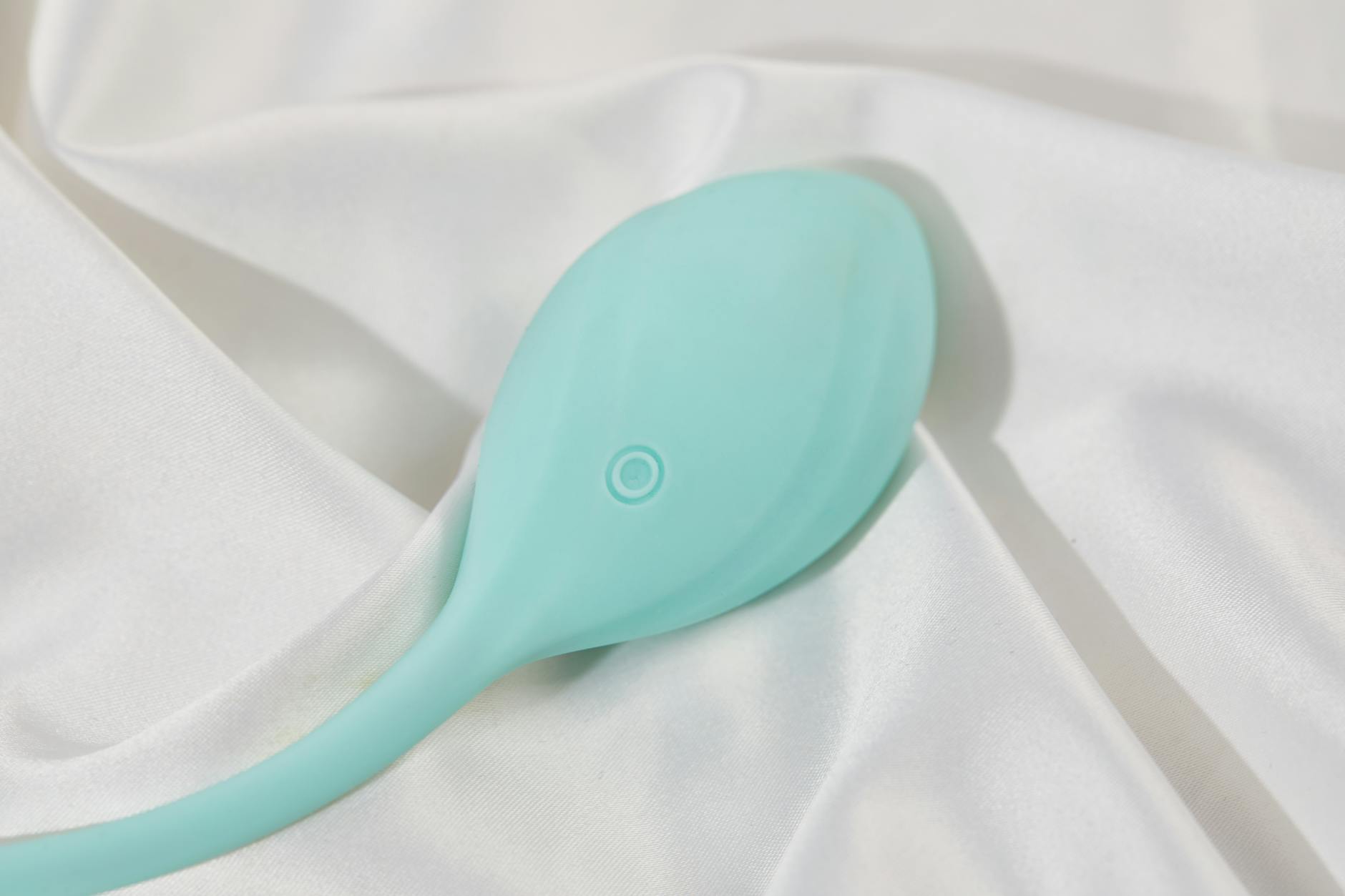
Let's start with the obvious part no one says out loud
Your body is not a standard template. So why would a lemon vibrator (or any clitoral vibrator) feel the same across everyone who uses one?
It doesn't. And the sooner you stop comparing your experience to someone else's glowing testimonial, the sooner you'll actually dial in what works for you. Here's what the anatomy actually tells us about why sensations vary so wildly, and what you can do about it.
How clitoral anatomy shapes sensation
The clitoris is not a single point. It's a whole organ. The visible part (the glans) is just the tip. The body extends internally, with two visible bulbs under the skin on either side, and nerve pathways that branch throughout the vulva and pelvic region.
Now here's where it matters: the distance from your skin surface to that internal network of nerves varies. For some people, the clitoral glans sits forward and proud. For others, it's recessed deeper under the hood. For some, it's naturally more sensitive because the nerve density is higher. For others, it's sturdier and requires more pressure.
This isn't a flaw. It's variation. And it changes everything about how a lemon clitoral vibrator feels.
Someone with a more prominent, highly sensitive glans might find that jumping straight to pattern 3 on the Lem feels overwhelming. Their nervous system is getting a signal fast. Someone with a recessed or less sensitive glans might need patterns 4 or 5 to register the same intensity.
Both are normal. Neither is broken.
The suction difference (why it matters for your body)
Lemon vibrators use suction, not just vibration. This changes the game for different anatomy. Suction creates a gentler, broader pull that stimulates the clitoris and the surrounding tissue simultaneously. It's less direct force, more distributed sensation.
For people with very sensitive glans tissue, this is often a gift. You get intensity without the sharp, sometimes painful buzz of traditional vibration alone. For people with recessed anatomy or lower surface sensitivity, suction can sometimes feel diffuse. You might need to pair it with a firmer hand position or use it longer to build the sensation.
The good news: once you understand your own anatomy, you can adjust. Most people with lemon sexual toys find their sweet spot within the first few sessions.
Thickness of tissue matters more than you think
Skin thickness varies across the vulva and across bodies. Thinner tissue is more reactive to stimulation but also more vulnerable to irritation. Thicker tissue can take more sustained pressure without discomfort.
Age, hormonal status, and genetics all influence tissue thickness. Someone in their twenties with high estrogen might have naturally thicker, more elastic tissue. Someone in perimenopause might notice tissue getting thinner. Someone on hormonal birth control might experience different sensation than someone off it.
This is why generalized "best practices" can backfire. If you're someone with naturally thin tissue and you're following advice aimed at thick-tissue bodies, you might be using too much pressure or lubricant too heavy for your needs. If you're thick-tissue and following sensitive-body protocols, you might never get the intensity you're chasing.
Know your tissue type. Adjust your approach accordingly.
Hood size and clitoral positioning
The clitoral hood (the fold of skin covering the glans) varies significantly. Some people have a generous hood that requires pulling back slightly to access the glans. Others have minimal hood, and the glans is immediately accessible.
This affects how you position a lemon vibrator for maximum contact. If you have a larger hood, you might need to angle the device differently or use one hand to gently retract the hood slightly while the other hand works the toy. If you have less hood, you might find direct contact more comfortable or even need to angle away from the glans to hit the surrounding area instead.
Again. This is not a problem. It's information.
How pelvic floor tension changes everything
Your pelvic floor (the muscles that support your bladder, uterus, and bowel) wraps around the base of the clitoris. If your pelvic floor is chronically tight or tense, it can restrict blood flow and change how sensation registers.
Some people naturally have tight pelvic floors from stress, anxiety, or past trauma. Others have loose or weak pelvic floor tone. Both affect pleasure differently.
If you have a tight pelvic floor, you might find that starting a lemon clitoral vibrator session with a few deep breaths and intentional relaxation actually increases sensation. Your muscles need to soften first. If you have a loose pelvic floor, you might find that you need more pressure or longer duration because the muscles aren't supporting the clitoris as firmly.
One solution that works for most people: kegels aren't just for tightening. Learning to relax your pelvic floor fully is equally important. Both tension and release matter.
Hormonal cycles and how they shift sensitivity
If you menstruate, your sensitivity to clitoral stimulation shifts across your cycle. During the follicular phase (before ovulation), estrogen rises, blood flow increases, and clitoral tissue becomes more engorged and reactive. You might need less intensity to reach orgasm.
During the luteal phase (after ovulation), progesterone rises and sensitivity often decreases. The clitoris becomes less swollen, and you might need more time, more pressure, or longer warm-up to get the same result.
This isn't static. It changes month to month depending on stress, sleep, diet, and other factors. If you're tracking what actually works for you across your cycle, you'll start to notice patterns. Your lemon vibrator isn't less effective some days. Your body's needs are just different.
Age and tissue changes
Younger bodies and older bodies respond differently to clitoral stimulation. In younger people, arousal often builds quickly and orgasm comes relatively easily (though not always, and never universally).
As you age, tissue changes. Skin loses elasticity. Hormones shift. Blood flow patterns change. But here's what surprises most people: older bodies often report more intense, longer-lasting orgasms. The sensation doesn't disappear. It transforms.
Someone in their fifties using a lemon adult toy for the first time might find they need slower warm-up but achieve deeper, more full-body pleasure than they did at thirty. This isn't deterioration. It's a different kind of response.
Nerve distribution and sensitivity hotspots
Your clitoral nerves aren't evenly distributed. Some areas of the vulva have higher nerve density than others. The glans typically has the densest concentration, but the corona (the ridge around the glans), the frenulum (the underside), and the surrounding labial tissue all have significant nerve endings.
For some people, the glans is the primary hotspot. For others, the corona or frenulum produces stronger sensation. Some people can reach orgasm primarily through G-spot stimulation with a partner, showing that pleasure pathways are deeply individual.
When you're experimenting with a lemon vibrator, pay attention to where you feel the most intensity. That information is your map. Not everyone's map looks the same.
Lubrication type and your personal chemistry
Lubricant isn't one-size-fits-all either. Some people's natural lubrication is thin and slippery. Others produce thicker fluid. Some are more alkaline; others more acidic.
Water-based lube works for most people, but quality matters. A thin, runny water-based can make suction feel less effective. A thicker, creamier formula might feel too sticky. Some people do better with silicone-based lubes (though these degrade silicone toys), and others with hyaluronic acid formulas.
Your lemon clitoral vibrator will feel different depending on what you use. If you find suction feeling weak or the device slipping around, it might not be the toy. It might be the lube.
The partner variable
If you're using a lemon vibrator with someone else, their presence, attention, and touch affect how your body responds. Some people can't orgasm with a partner in the room, even if they can easily alone. Others find that a partner's focus and touch intensifies sensation dramatically.
This isn't a reflection on the relationship. It's neurology. Your nervous system responds differently in different contexts. Knowing this helps remove shame from the equation.
Medication and supplement effects
Antidepressants, blood pressure meds, hormonal birth control, and even supplements affect blood flow and sensitivity. Some medications dull arousal and orgasm. Others enhance it. Some have no effect at all, but the person using them spends months blaming themselves or the toy instead of considering the medication.
If you've recently started or changed medication and notice a shift in pleasure, that's data. Talk to your doctor about it. Sometimes a different drug in the same class works better for your body.
What to actually do with this information
Start with baseline knowledge of your own anatomy. You don't need a speculum. Just honest observation. Is your clitoral glans prominent or recessed? Does your hood cover it substantially? Do you have any obvious asymmetry? Are you naturally more sensitive or do you prefer firmer pressure?
Then experiment methodically with your lemon vibrator. Start at pattern 1. Notice what you feel and where. Move through the patterns slowly. Don't assume that faster or harder equals better for you. Some bodies reach their best sensation at pattern 2. That's valid.
Test lubrication types. Try water-based, then silicone-free alternatives, and notice the difference. Pay attention to your cycle if you menstruate. Notice how your needs shift.
If you're with a partner, communicate about this explicitly. "I need more warm-up today" or "I'm extra sensitive right now" is information your partner needs to support the experience.
Most importantly, stop comparing. Your lemon sexual toy won't produce the same result as your friend's because your bodies are not the same. That's not a failure on anyone's part. It's just anatomy.
FAQ: Your actual questions answered
Why does my lemon vibrator feel less intense than my friend's description?
Likely your anatomy, hormone status, or lubricant choice is different. Try moving to a higher pattern, warming up longer, or switching lubrication types. If you have a naturally lower nerve density or recessed glans, you might always need more intensity than someone else. That's fine. What matters is what works for your body, not matching someone else's experience.
Can pelvic floor tension really change how a lemon clitoral vibrator feels?
Absolutely. A tight pelvic floor restricts blood flow and sensation. Try this: before using your lemon vibrator, do three minutes of deep belly breathing and consciously relax your pelvic floor muscles. You'll likely notice more sensation immediately. If you have chronic tightness, working with a pelvic floor physical therapist can be transformative.
Does tissue thickness mean I'm using the toy wrong?
No. It means you might need a different approach than someone with different tissue. Thinner tissue might benefit from lower patterns and longer warm-up. Thicker tissue might need higher patterns. Neither is wrong. Once you know your tissue type, you can dial in accordingly.
Why does my sensitivity change throughout my cycle?
Hormones. During the follicular phase (before ovulation), estrogen rises and your clitoris becomes more engorged with blood. During the luteal phase, progesterone dominates and sensitivity typically drops. This is normal. Some people track their cycle and intentionally use their lemon vibrator differently depending on the phase. Others ignore the cycle and just accept that some sessions feel different. Both approaches work.
Can medication really affect how my lemon vibrator works?
Yes. Antidepressants, blood pressure medication, hormonal birth control, and even high-dose supplements can dampen arousal and orgasm. If you've noticed a change since starting something new, talk to your doctor. Sometimes switching to a different medication in the same class helps. Sometimes it's just about adjusting expectations while your body acclimates.
Is it normal to prefer suction over vibration for my body type?
Completely normal. Some anatomies respond better to the broad, gentle pull of suction than to the sharp buzz of vibration. This is why lemon sexual toys work so well for so many people. The suction mechanism accommodates a wider range of bodies than traditional vibrators do. If suction feels better for you, that's not unusual. That's your body telling you what it needs.
Your body isn't broken. It's just different from everyone else's. Once you stop fighting that and start exploring it, pleasure becomes a lot more available.
Ready to find what actually works for your anatomy? Start with a single session of patient experimentation. Lower patterns. Longer warm-up. Good lubrication. Pay attention to what you feel, where you feel it, and what builds sensation over time. That information is your roadmap.